tanzplattform deutschland 2026
Cranky Pitch

In our performances, the audience doesn’t just watch choreography — they experience choreography being made in real time.
Hello, we are Peter Pleyer and Michiel Keuper, and together we founded Cranky Bodies a/company in Berlin.
Rather than pitching one specific piece, we want to introduce a choreographic practice that we have developed over many years.
Our collaboration started in the 1990s when we met as students in Arnhem in the Netherlands — Michiel in fashion design and Peter in the progressive dance department at the European Dance Development Center. Since then, we have continuously worked together at the intersection of dance, scenography, costume, and improvisation.
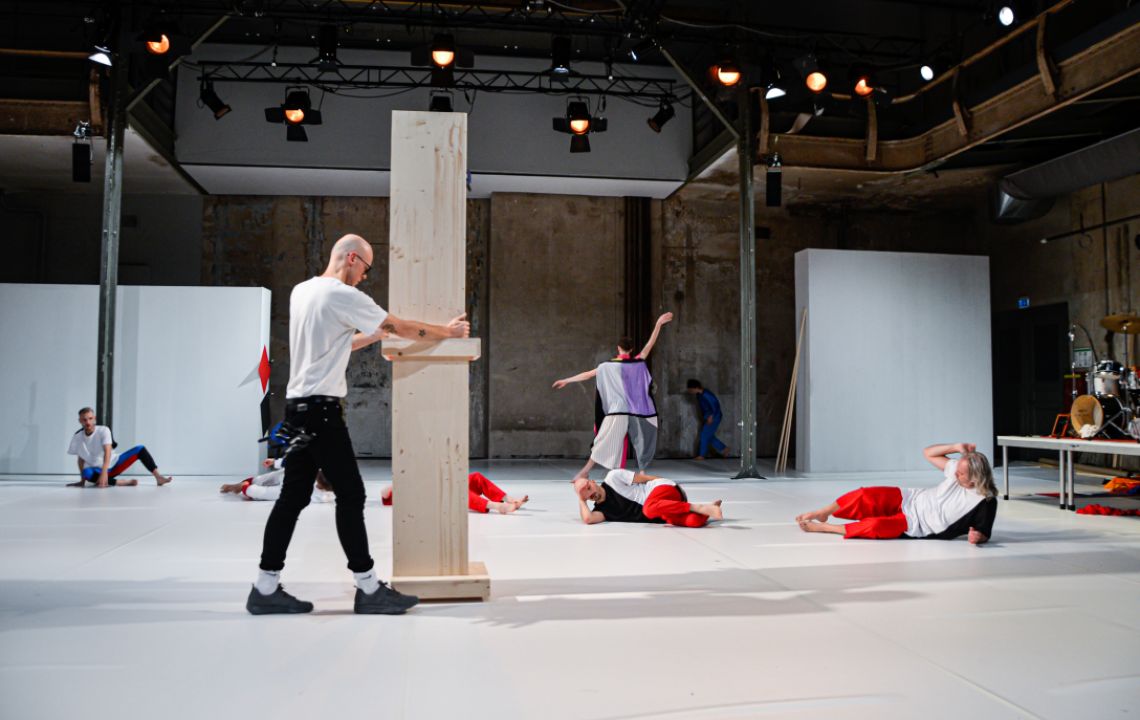
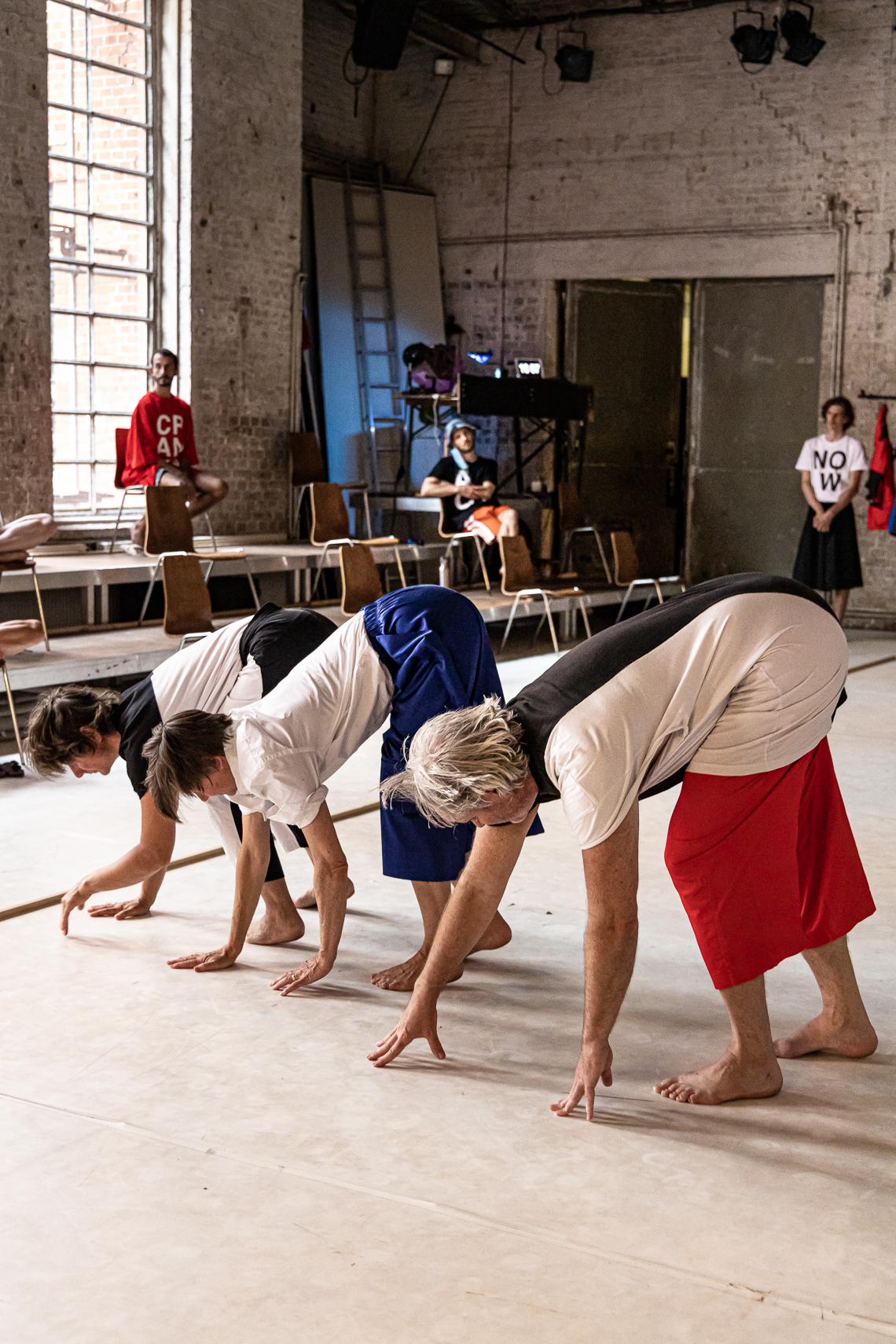
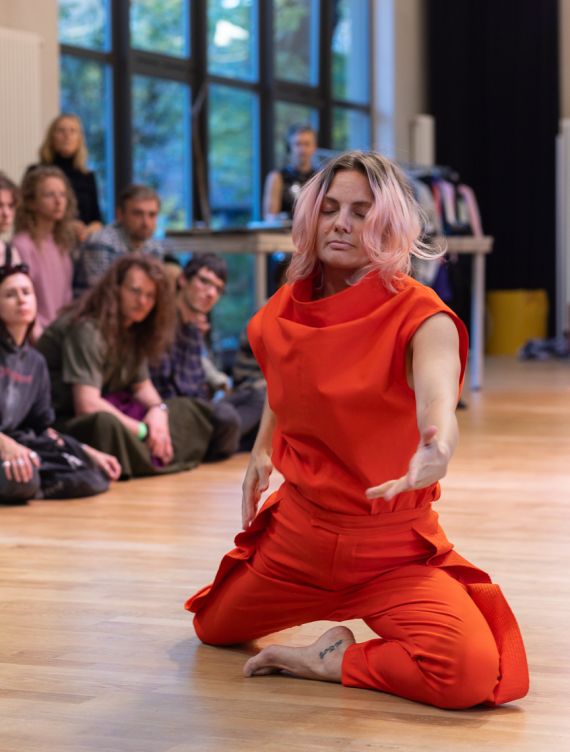
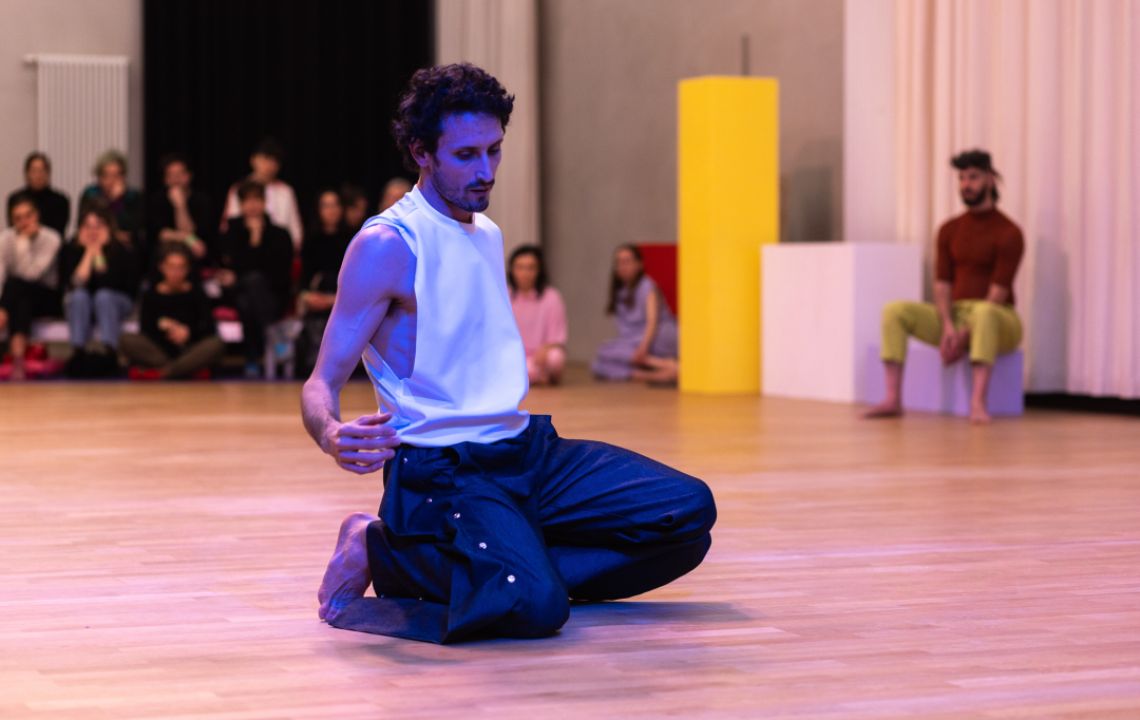
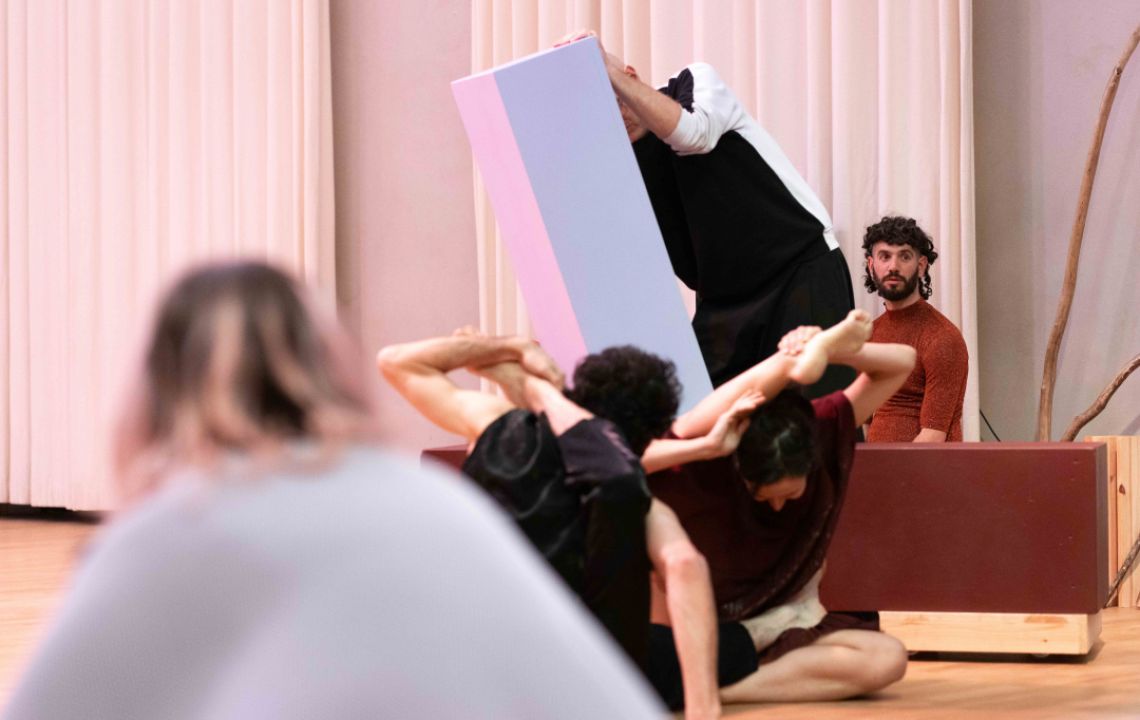
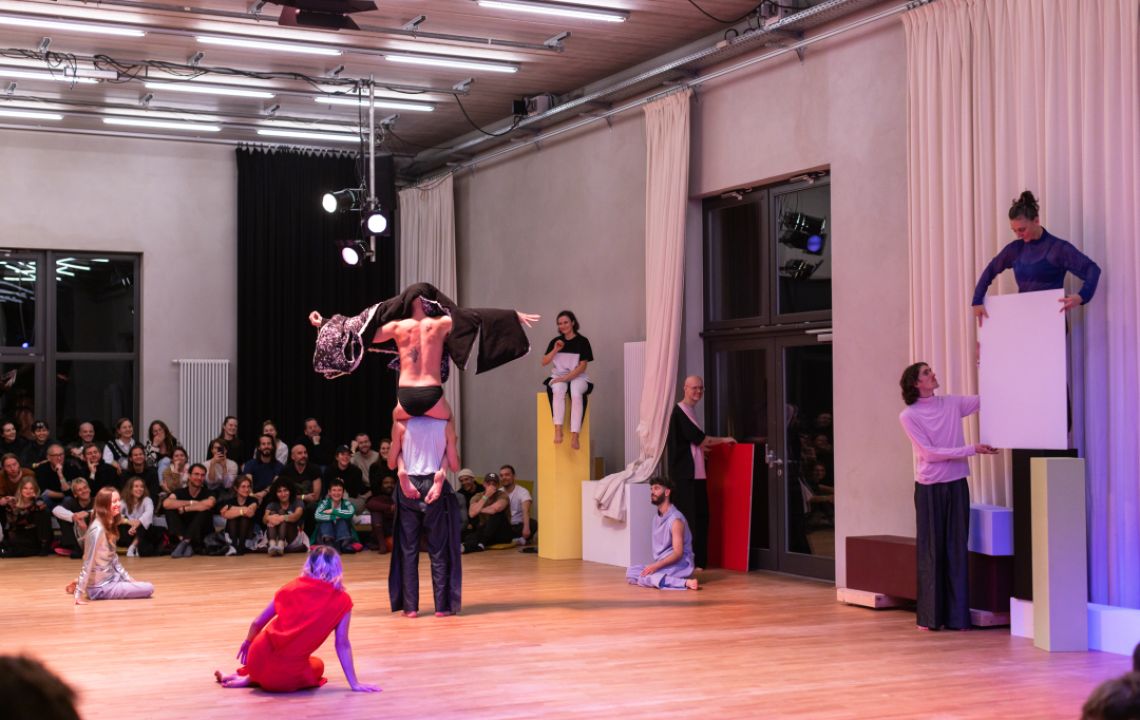
At the core of our work is group improvisation as a highly developed performance craft. We create structured scores that allow dancers to make decisions in real time. This means every performance is unique, and the audience witnesses the unfolding of the piece — the relationships, choices, and transformations happening live.
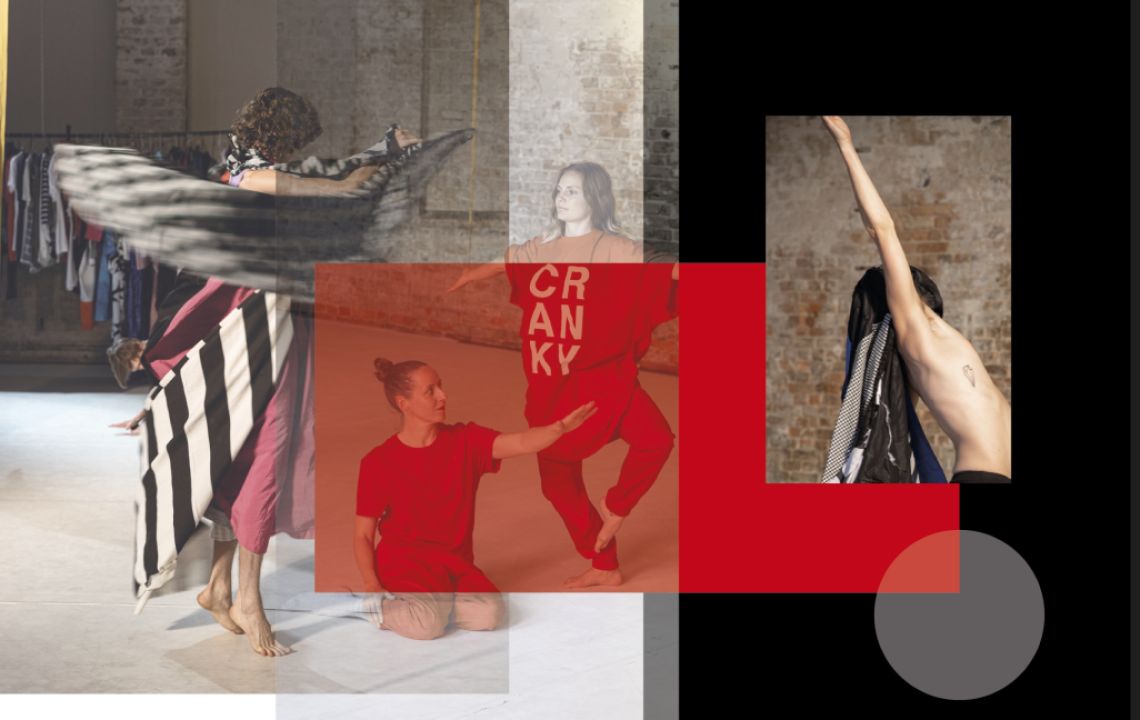
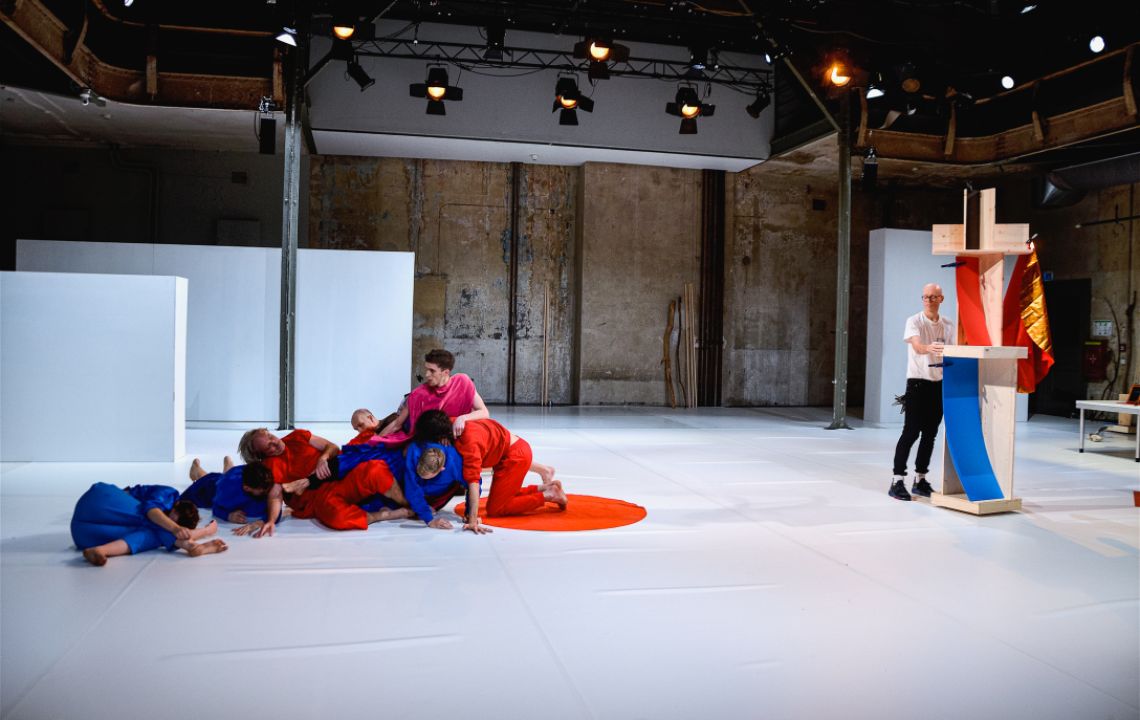
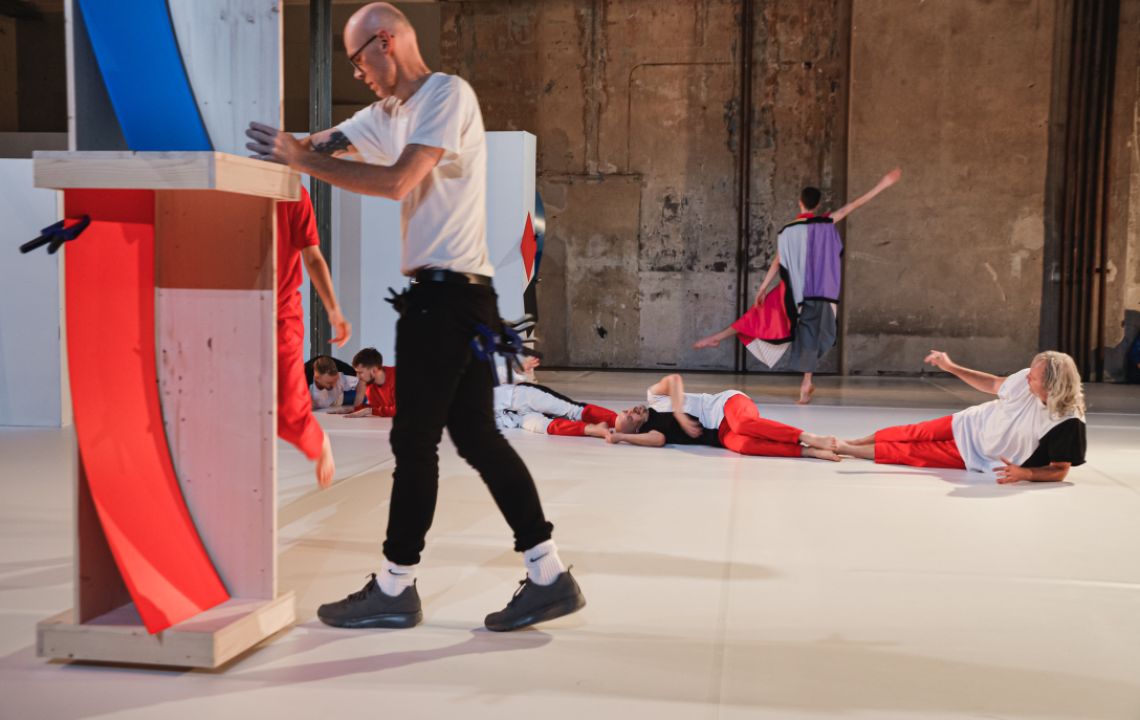
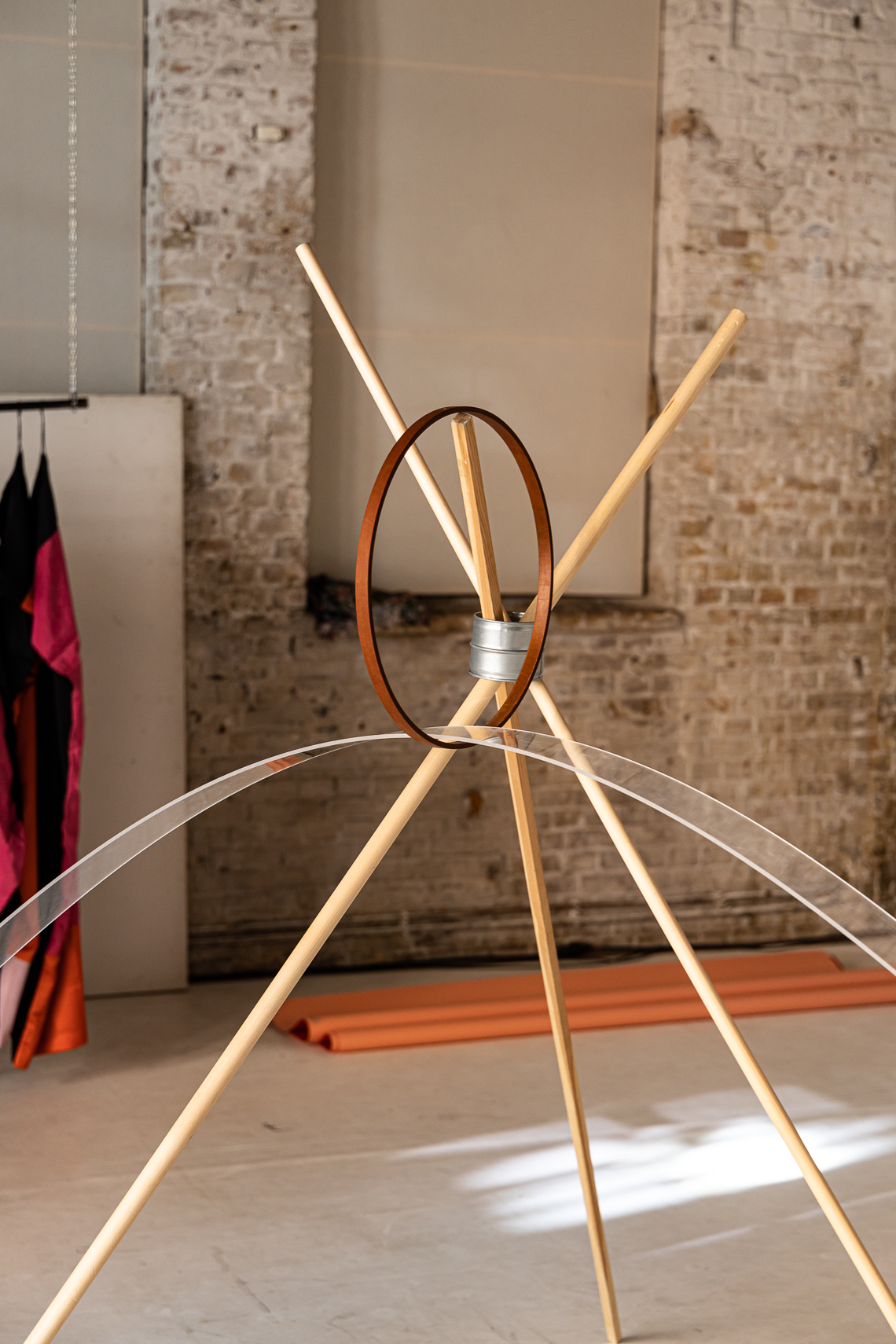
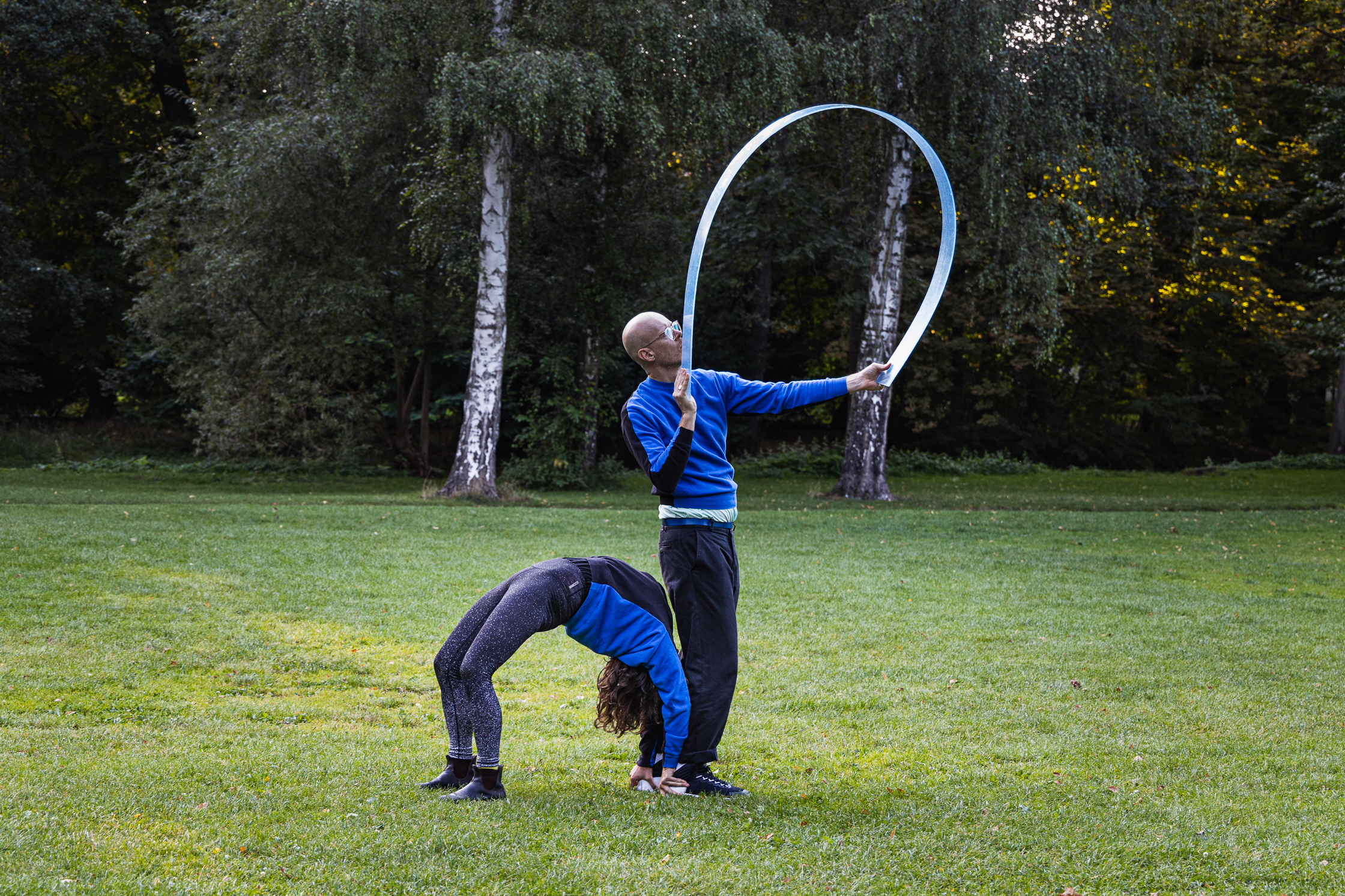
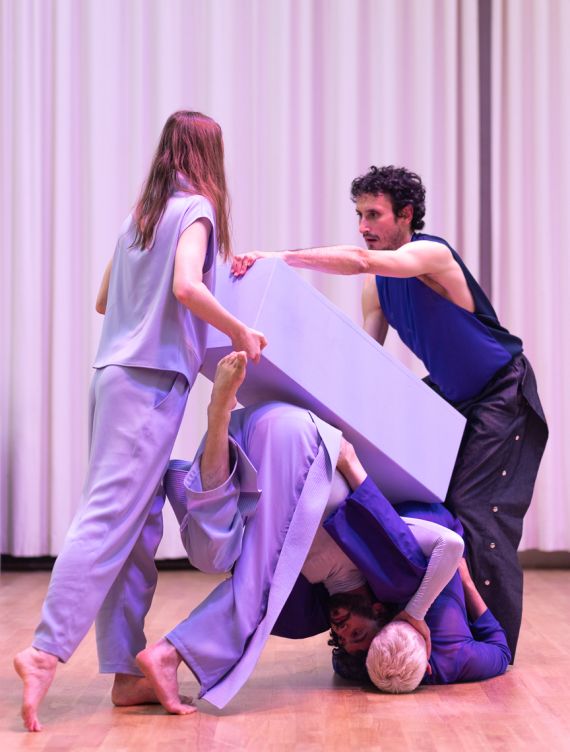
Over the years, we have developed a set of choreographic tools combining practices such as Contact Improvisation, Authentic Movement, and ensemble scoring, alongside scenographic systems we call Transition Sculptures — simple modular structures built from found or recycled materials.
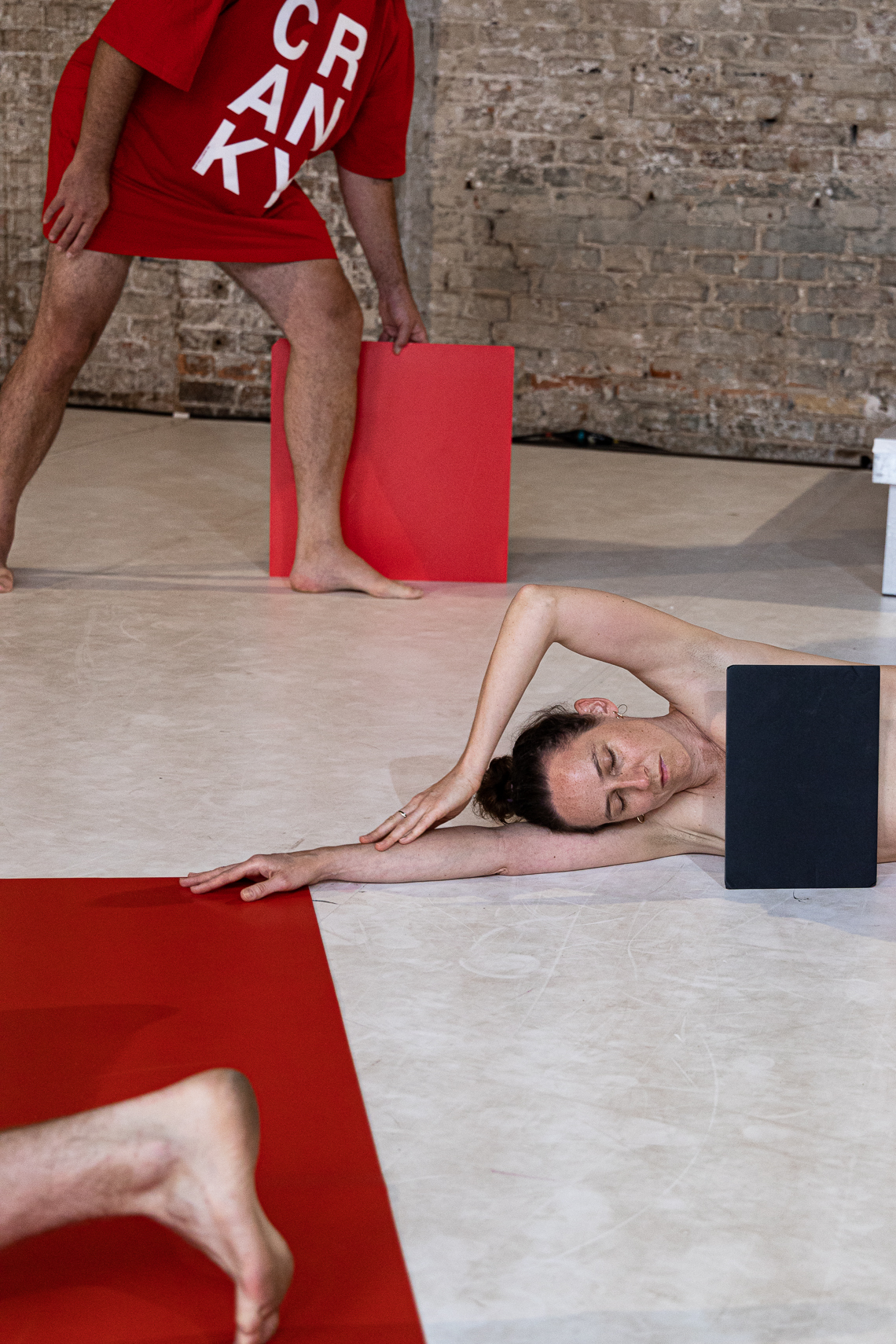
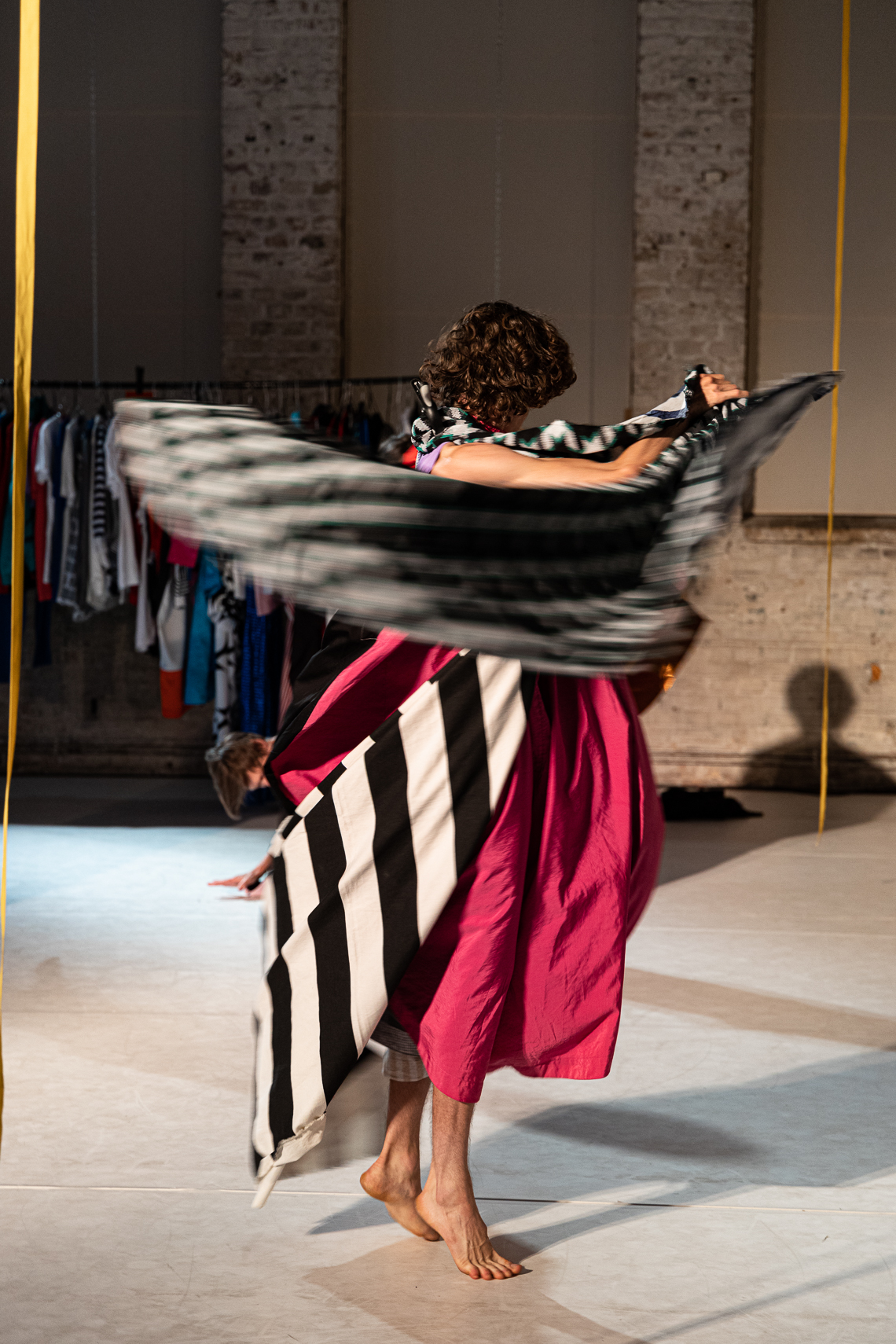
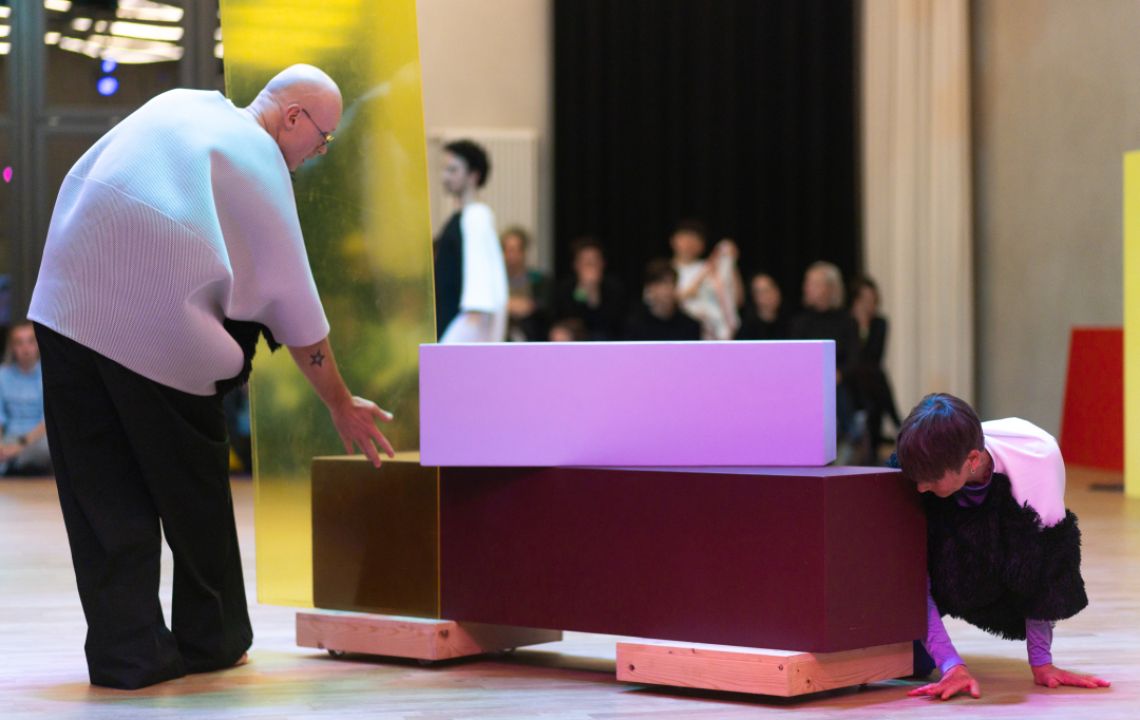
Our costumes are interchangeable collections rather than fixed designs, allowing performers to transform the visual composition throughout the performance.
This approach makes our work very adaptable.
We can present our existing works with our ensemble, restage them with different cast sizes, collaborate with local performers through workshops, or develop site-specific versions for festivals or alternative spaces.
Recent works include Cranky Bodies Dance Reset, Terrestrial Transit, and View.Point.Mary, which continue to evolve and can be restaged in new contexts.
At the moment, we are also looking for co-producing partners for a new project planned for 2027.
So what we offer is not just a finished piece, but an evolving choreographic practice that can connect with different venues, artists, and audiences.
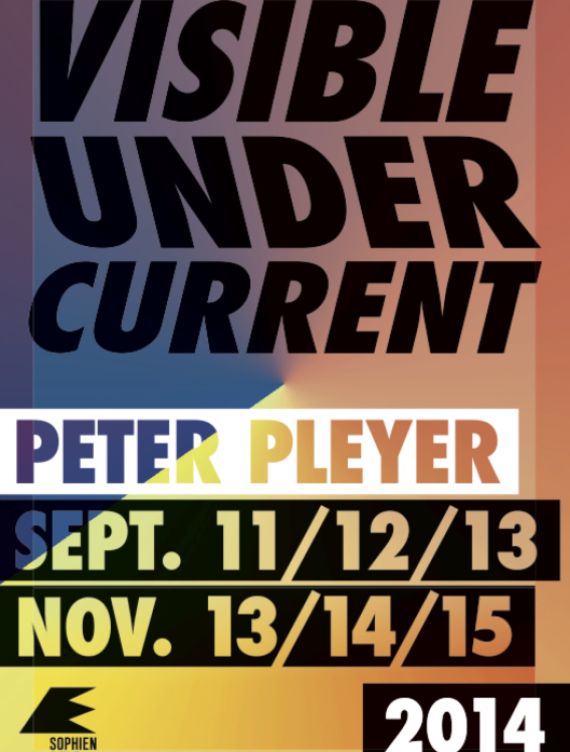
Visible Undercurrent 2014
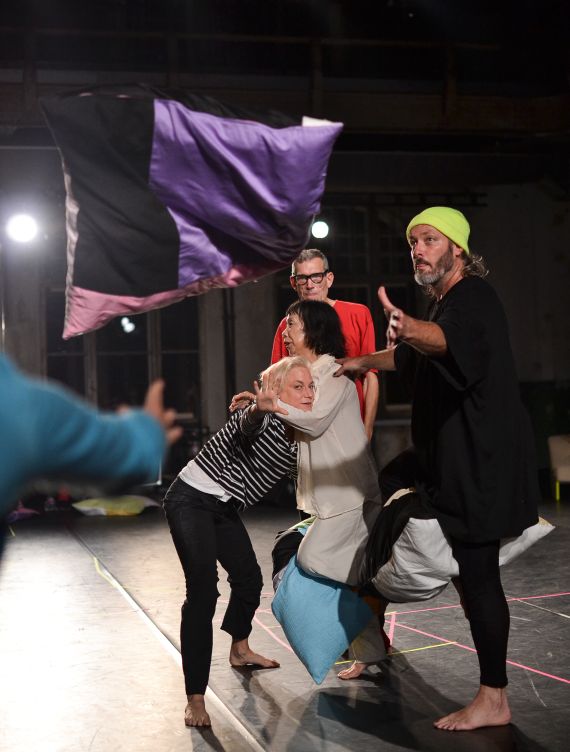
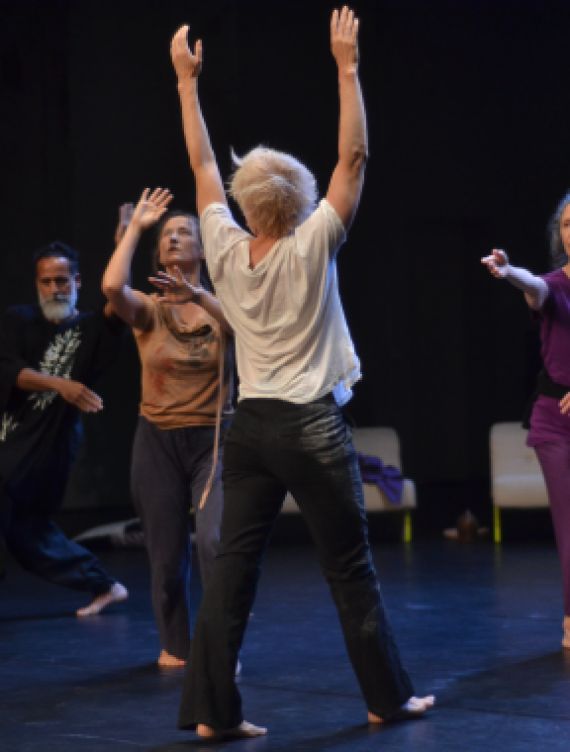
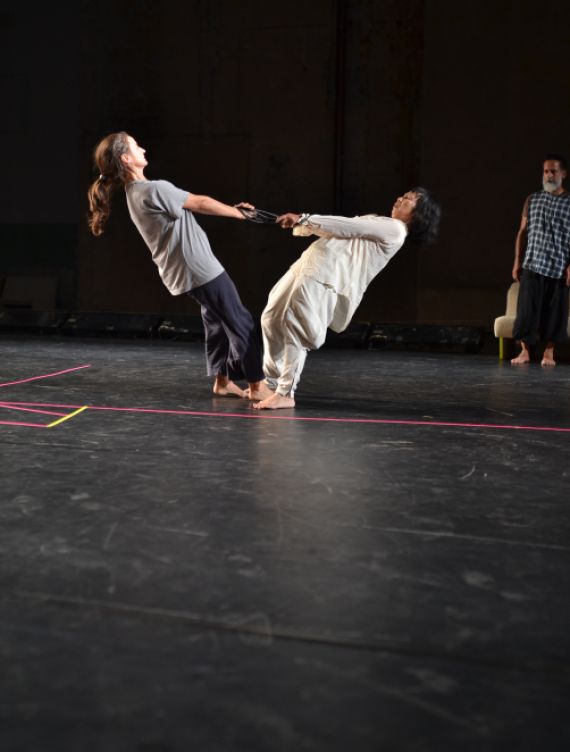
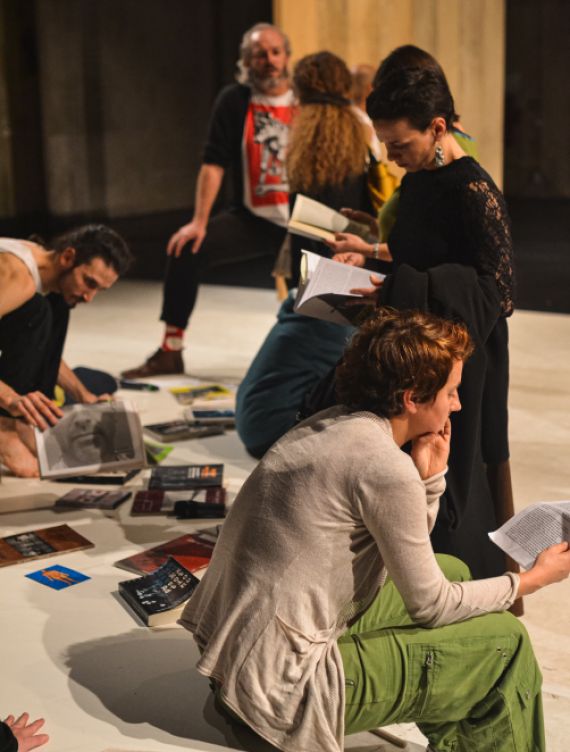
2014 — our first funded project through the Hauptstadt Kultur Fonds in Berlin, at the Sophiensæle.
I very much believe in my progressive dance education, and at the same time I felt the frustration about how slowly the transmission of new ideas in contemporary dance actually happens.
In the Berlin context, I could see in the work of Sasha Waltz and Meg Stuart many components of these newer ways of choreographing — ideas that I share and that I wanted to make more visible and help articulate.
So I invited Meg and Sasha, together with my teachers Mark Tompkins from Paris , Eva Karczag from Arnhem and Yoshiko Chuma from New York, and a group of young dancers that I had encountered through my teaching.
We came together to improvise and to articulate some of these shared findings.
After a rehearsal period of ten weeks, this next generation of dancers performed a piece based on what had emerged from that process.
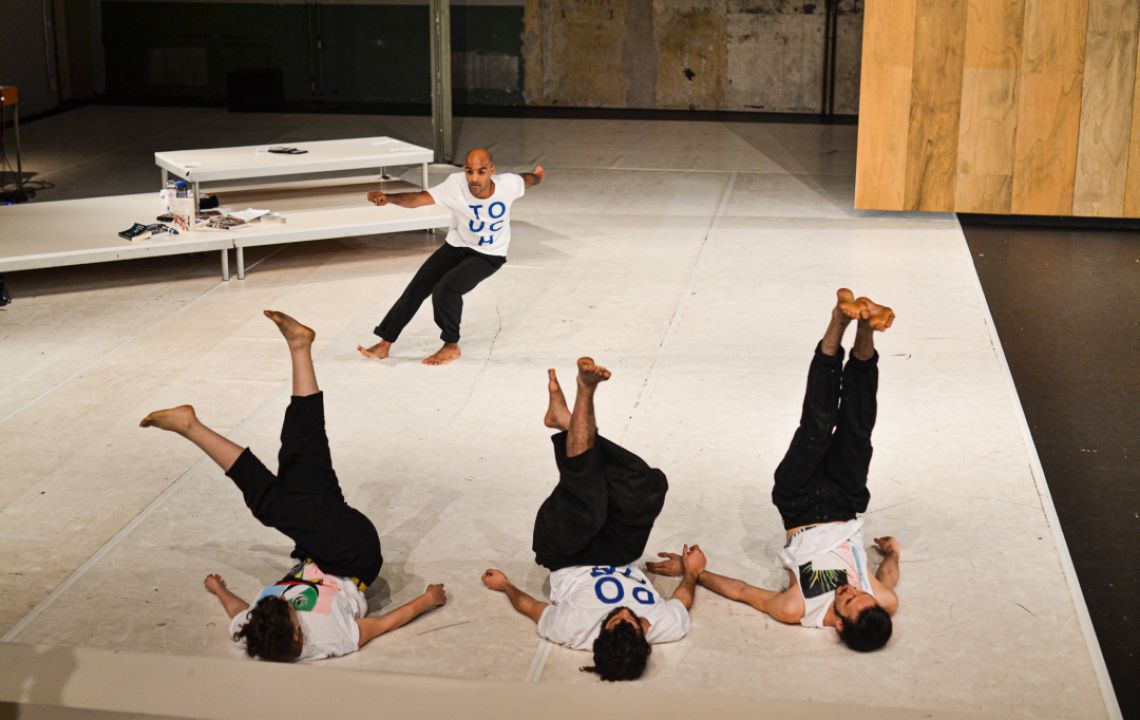
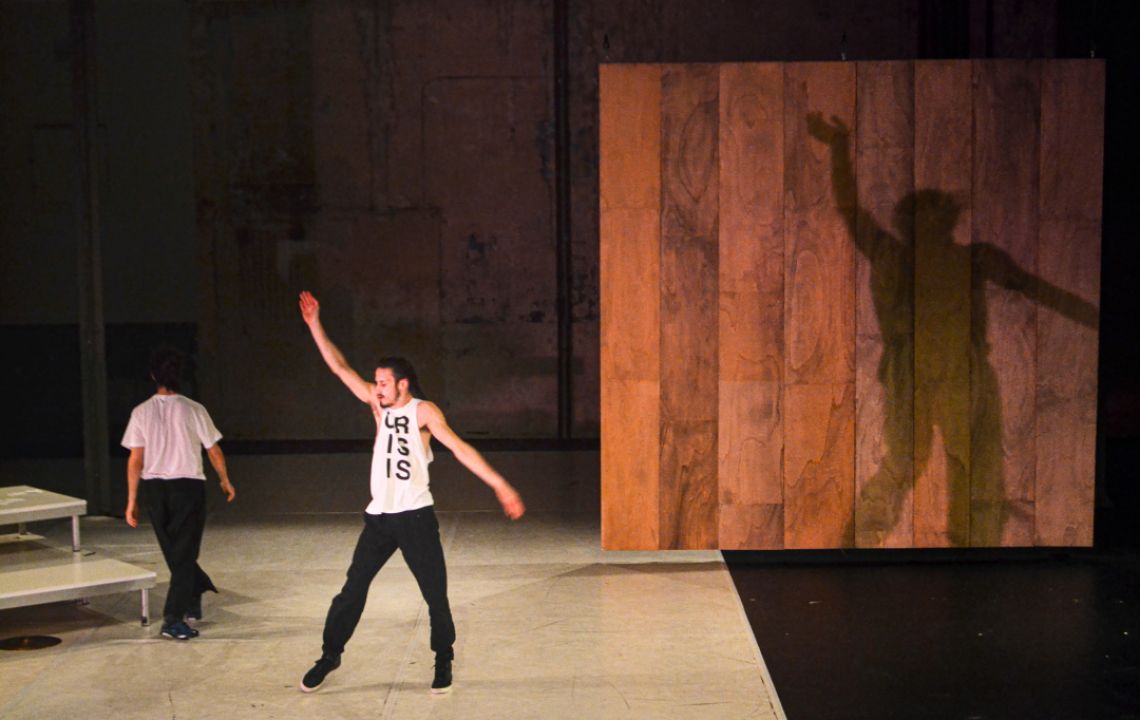
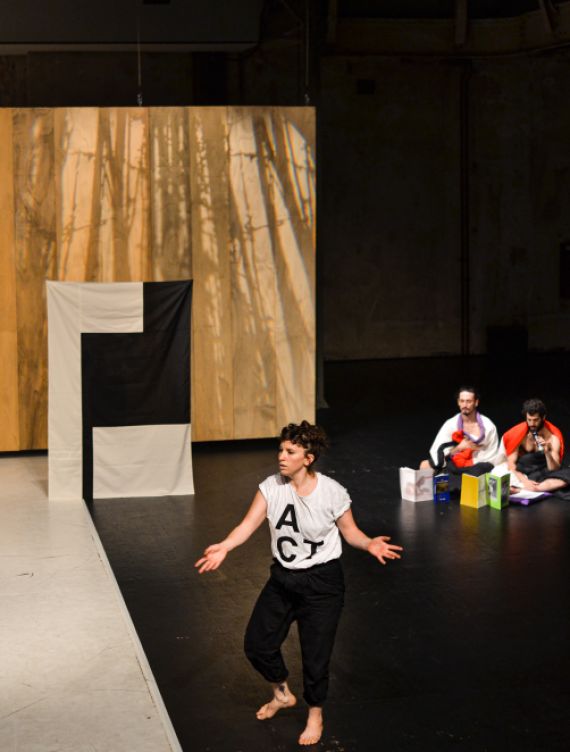
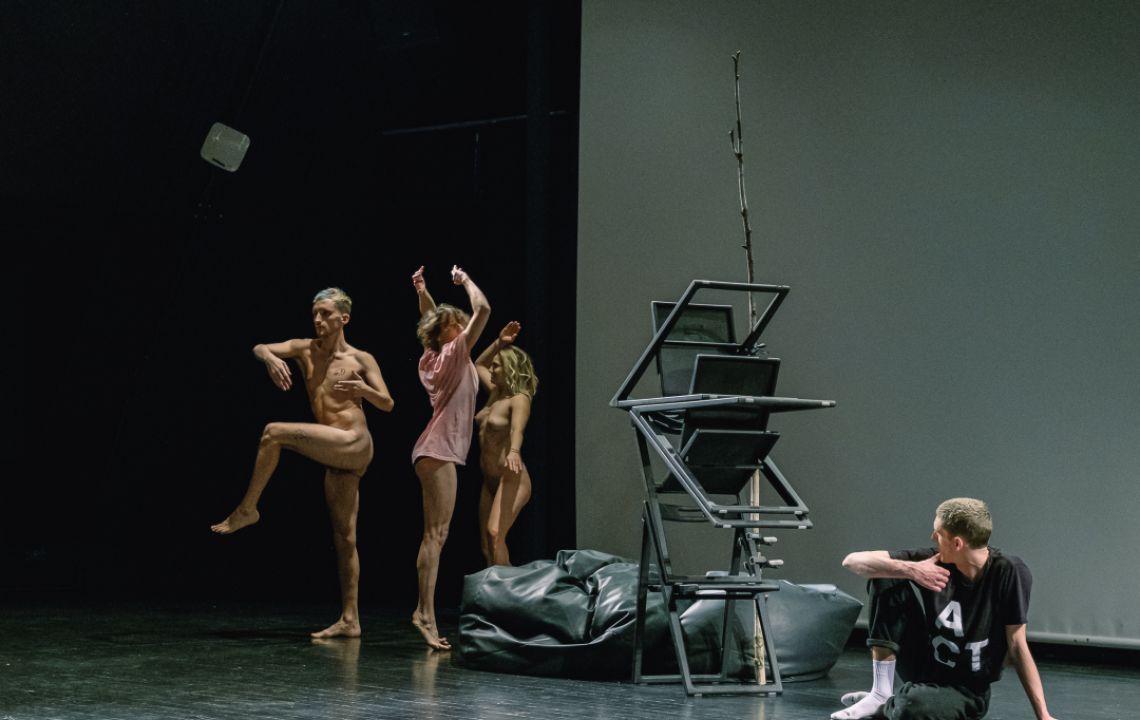
Michiel’s contribution was the scenography, and for the costumes he created slogan T-shirts with TOUCH, POOR, CRISIS, ACT, alongside other hand-painted shirts.
Moving the Mirror 2016
This project was developed in collaboration with dance and art institutions in Poland:
the Center for Contemporary Art Ujazdowski Castle in Warsaw and the Art Stations Foundation by Grażyna Kulczyk / Stary Browar Nowy Taniec in Poznań.
Berlin and Warsaw dancers came together to work with improvisation structures that I had assembled from my studies and practices:
Anatomical Release Work in the line of Mabel Todd, Barbara Clark, and Lulu Sweigard.
Contact Improvisation as technique and group scoring — Jam, Faller/Jumper/Catcher.
Contemplative Dance Practice developed by Barbara Dilley.
Ensemble Thinking by Nina Martin.
And Authentic Movement as duet and group score.
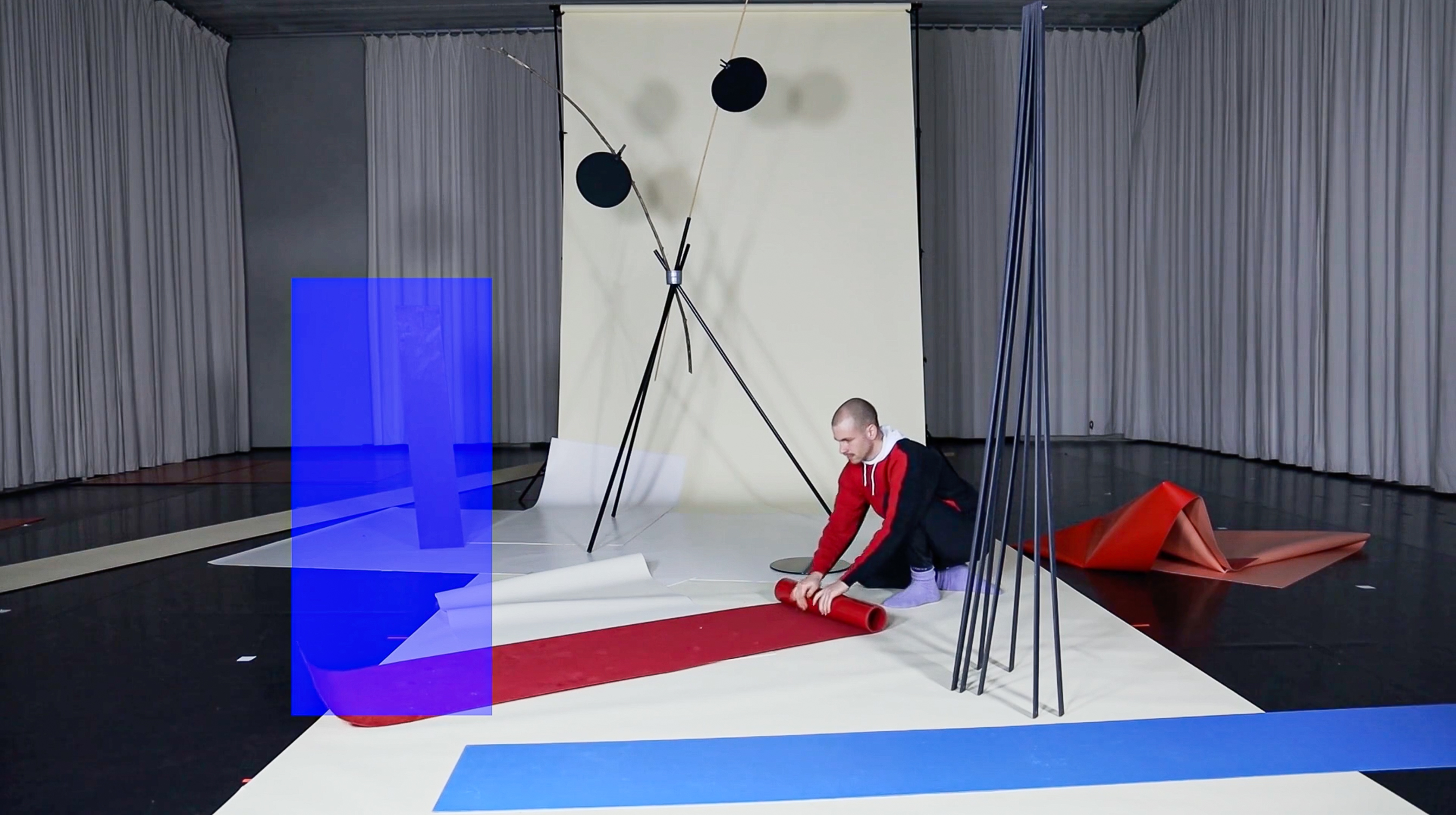
It was here that Michiel’s Transition Sculptures began — which later became a strong signifier in our work with Cranky Bodies a/company.
We had very little money and almost no time for pre-production.
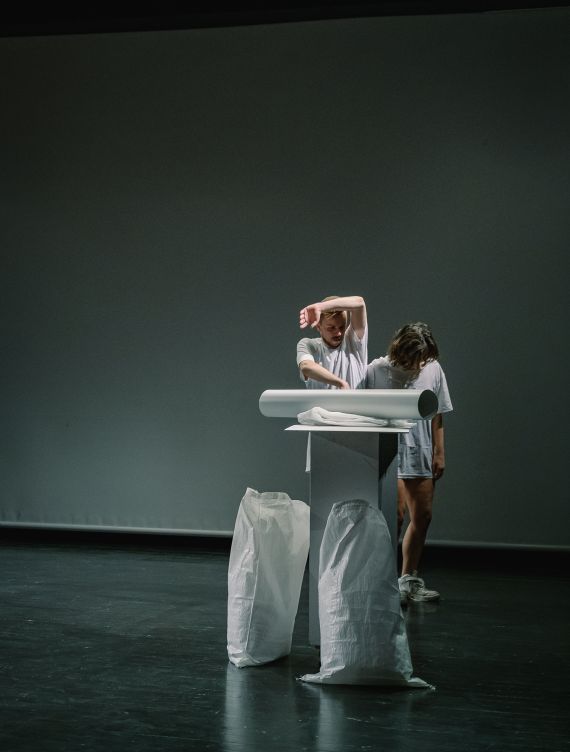
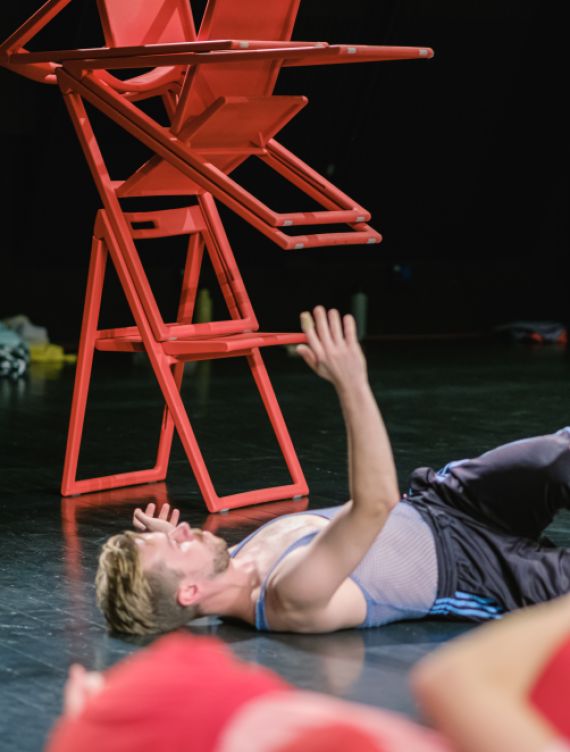
So, in a way similar to what Robert Rauschenberg did for the Merce Cunningham Dance Company, Michiel used whatever he could find in the backstage of the performance space as scenography:
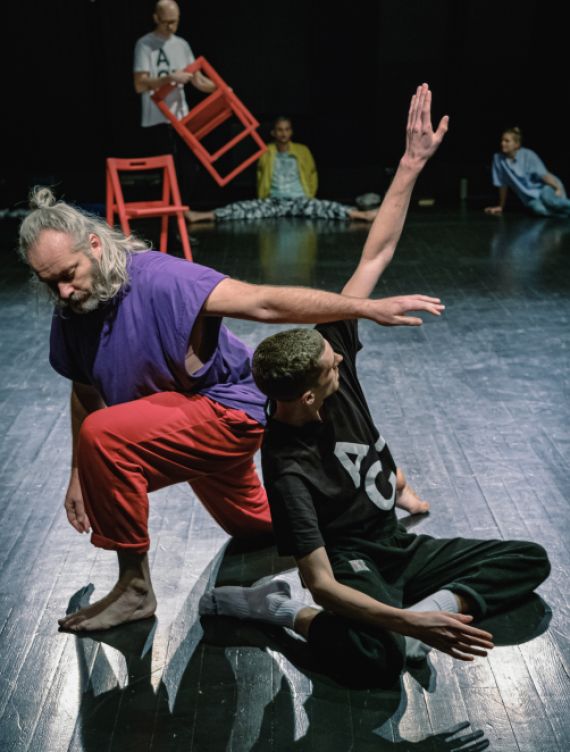
red, white, and black chairs,
branches from trees,
and some materials bought from a Baumarkt.
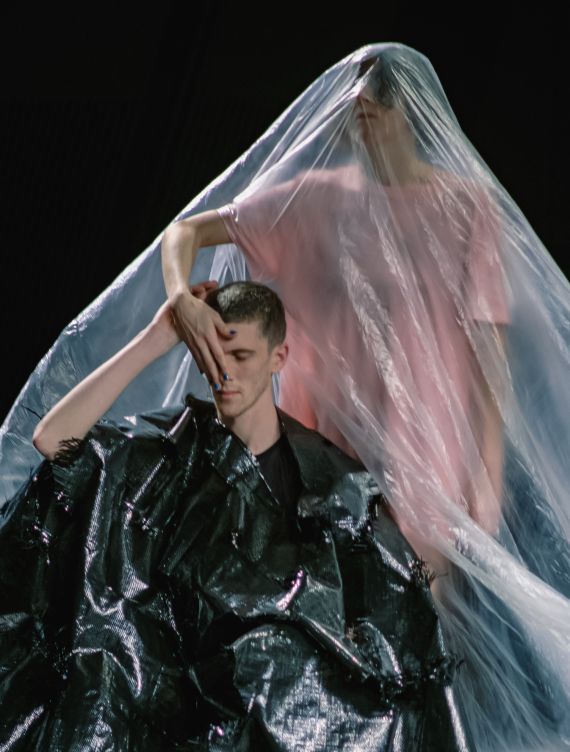
The dancers picked and changed outfits freely according to a color scheme — with nudity also as a costume option.
In the newly rebuilt performance residency space at the CSW we performed for two nights.
Other artists in residence, including artists from India, came to watch both evenings, and their feedback has guided our work ever since.
After the first evening they had many questions:
What are they doing?
After the second evening they saw a completely different performance with the same ingredients and structure — and they understood the particular craft and skill that the dancers were presenting.
Cranky Bodies Dance Reset 2017
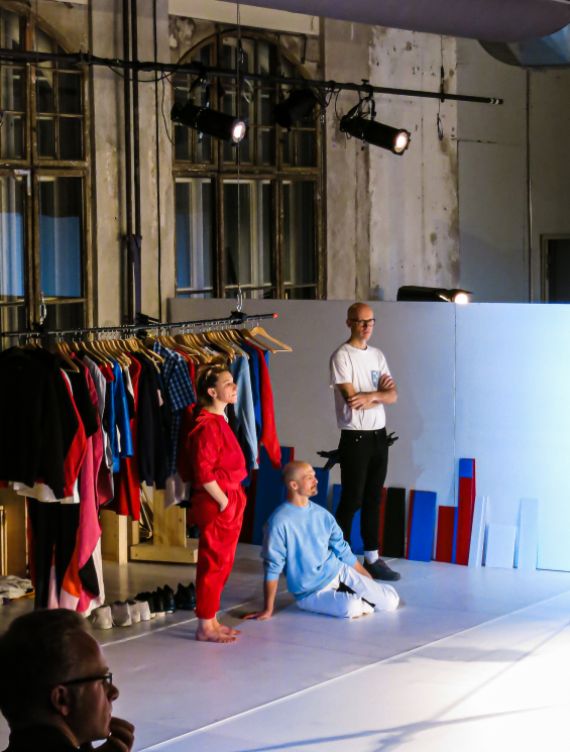
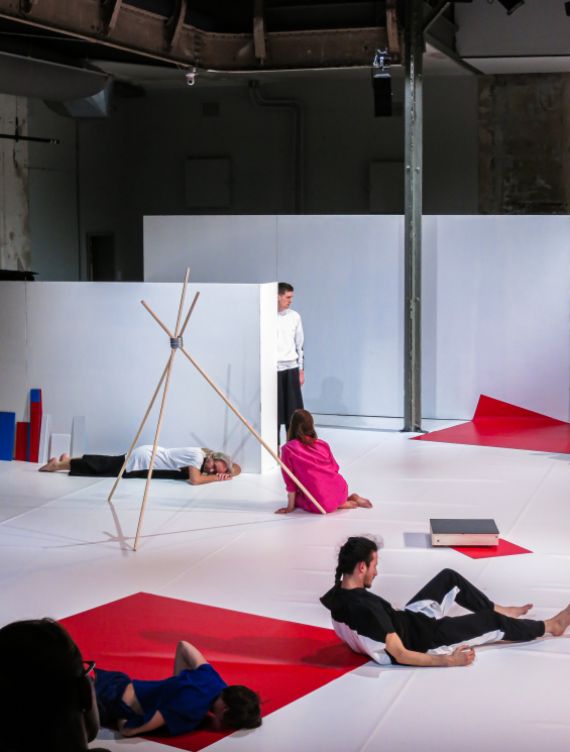
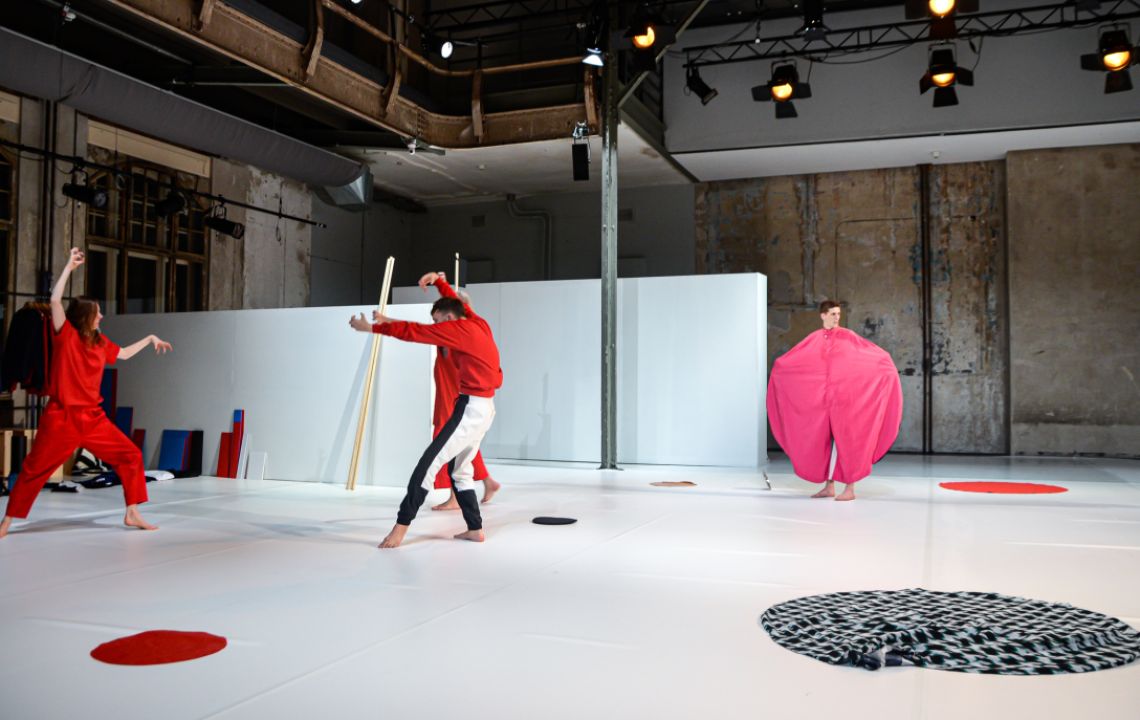
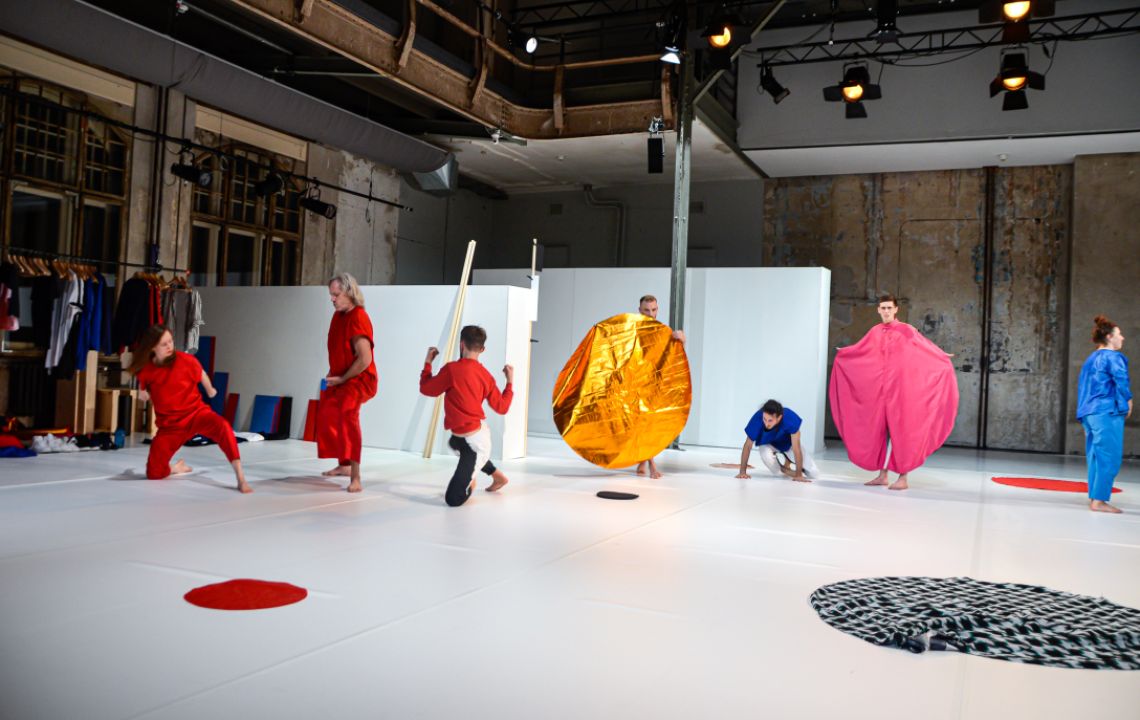
With Cranky Bodies Dance Reset, we developed a 90-minute open score.
The idea was that an ensemble could be built through the development of strong improvisational skills among all performers — and through a close engagement with groundbreaking group works in contemporary dance from the recent past.
Alongside works by Meg Stuart and Sasha Waltz, we also looked at and researched works by Lucinda Childs, Trisha Brown and Stephanie Skura, who had been one of my teachers.
Her text “Politics of Method” became an important cornerstone of our work. In it she writes:
> Dance is political not only because of its subject matter, but because of the way dances are made, how they are structured, and what they show about people relating to each other.
And I would add: also how they relate to an audience.
Her work Cranky Destroyers from 1988 eventually gave our company its name: Cranky Bodies a/company.
With Cranky Bodies Dance Reset, several central elements of our work came together for the first time on the large stage of the Sophiensæle in Berlin:
- virtuosic dance improvisation skills
- Transition Sculptures, built from prefabricated wooden structures, fabrics, sticks, and other found or purchased materials
- a collection of interchangeable costumes with a clear and sophisticated concept of color and cut
- live music
From this point on, we began to focus our dance research on specific group improvisation structures as the basis for each new creation.
For Cranky Bodies Dance Reset, this structure was the Contemplative Dance Practice developed by Barbara Dilley.













Terrestrial Transit 2022
With Terrestrial Transit, we deepened our connection to dance in Poland.
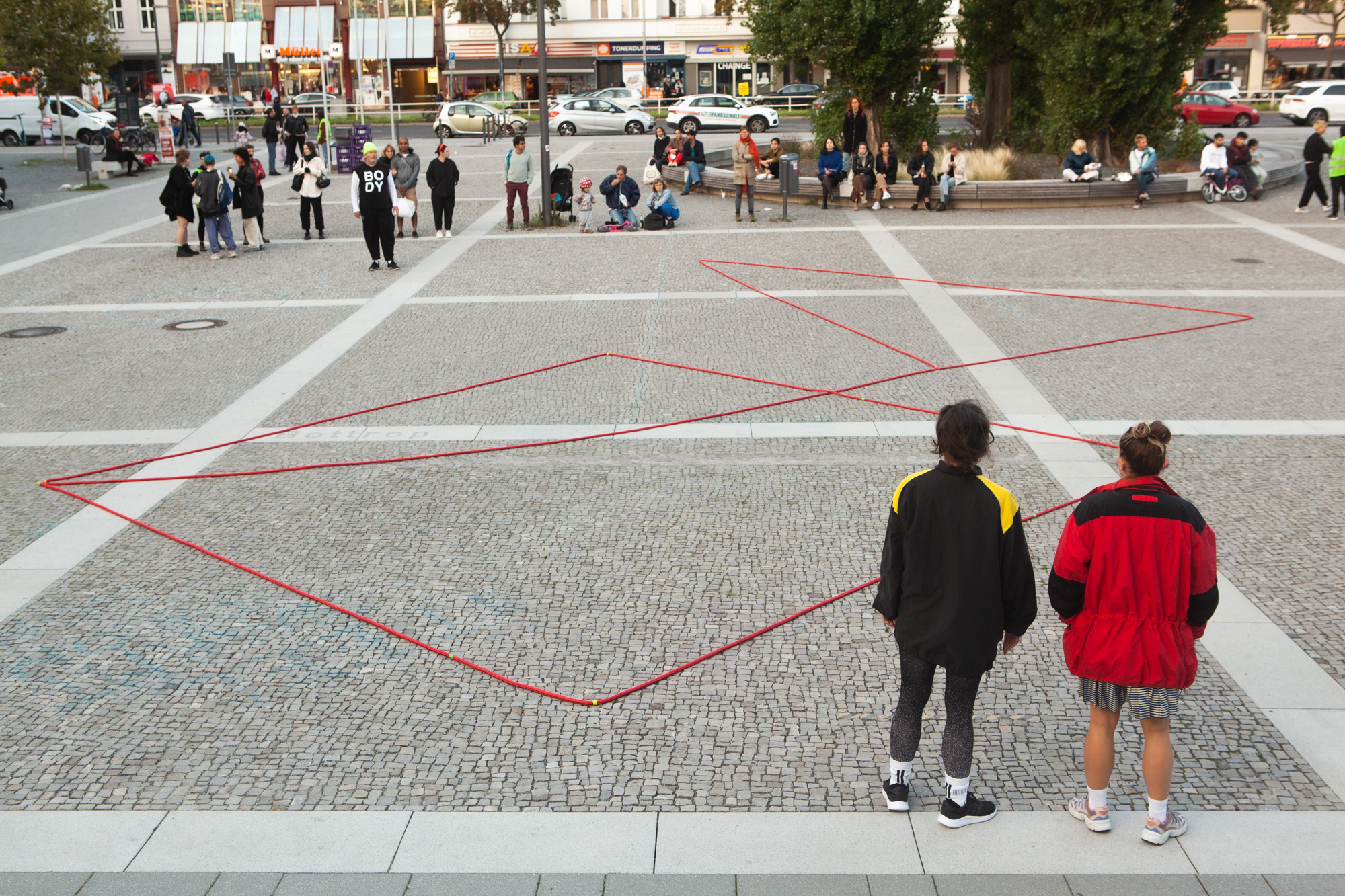
Together with our ensemble, we travelled from Berlin through the Brandenburg countryside to Szczecin and the Baltic Sea, working in two-week residencies in different locations along the way.
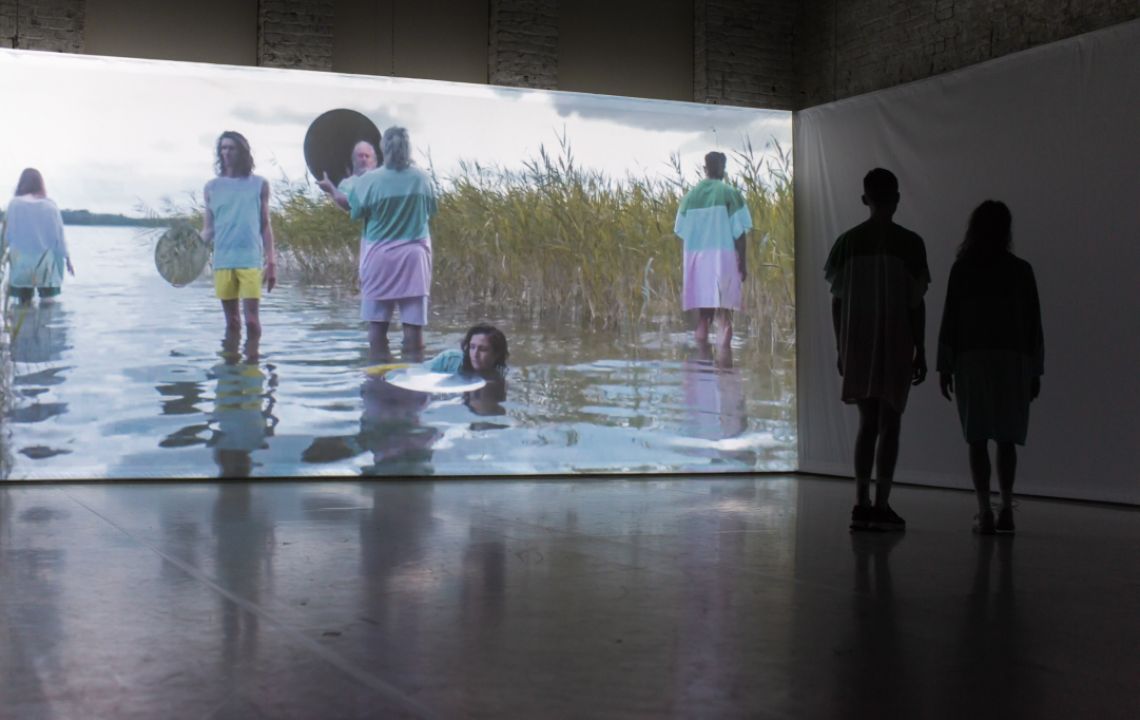
We collaborated with the filmmaker Stella Horta to develop a three-hour immersive dance and video installation.
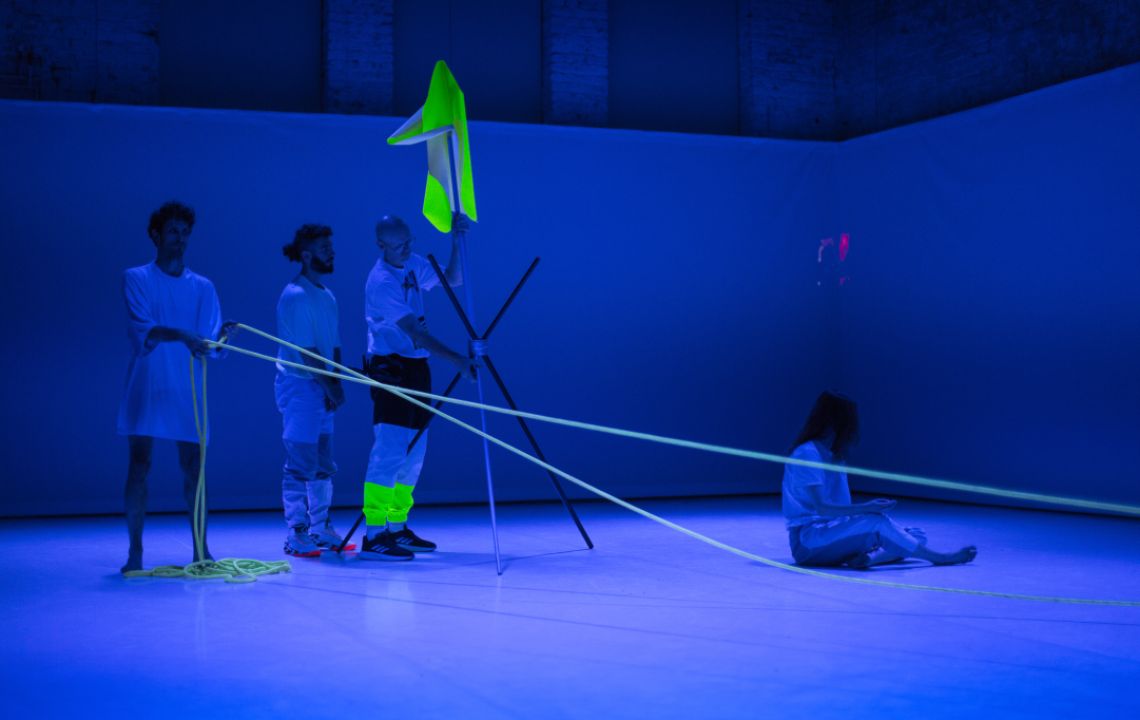
Because we were travelling, the materials for the Transition Sculptures had to be very limited.
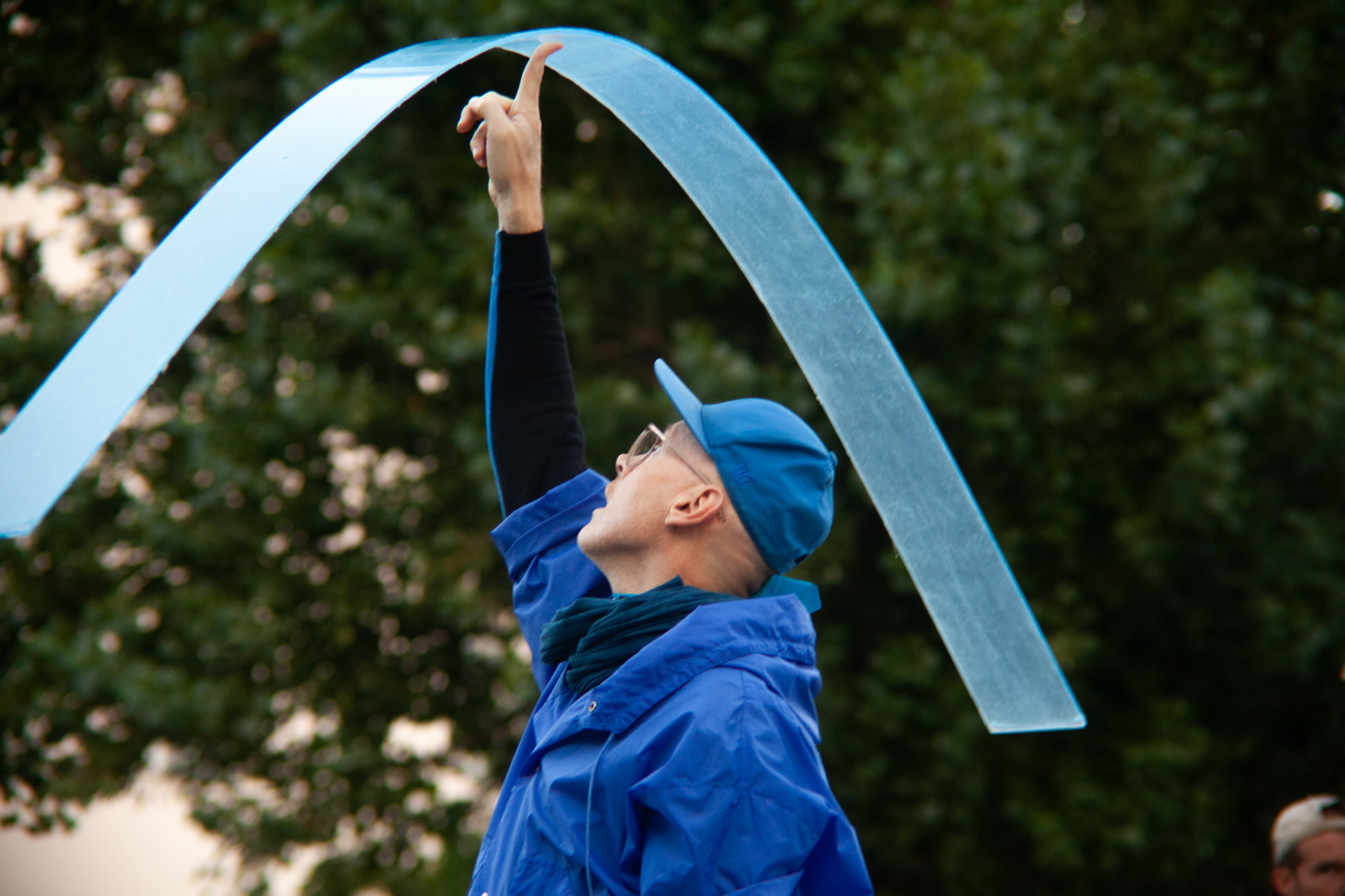
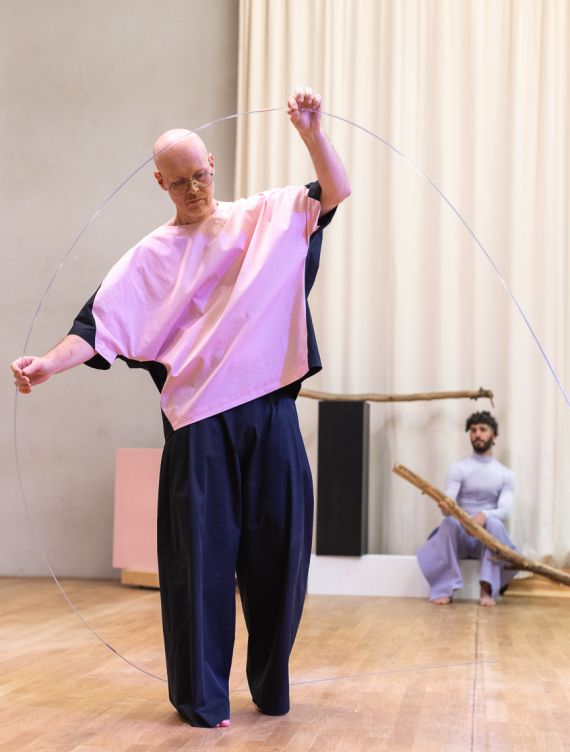
We worked with a small set of elements: a collection of round mirrors, sticks, a 100-meter rope, some fabrics, and wind-sacks.
The interchangeable costumes followed a clear color scheme — a collection of lightweight and oversized T-shirts, shirts, and pants that the performers could change and recombine during the performance.
For the group dance research in this project we worked with the Underscore, the improvisational structure developed by Nancy Stark Smith.
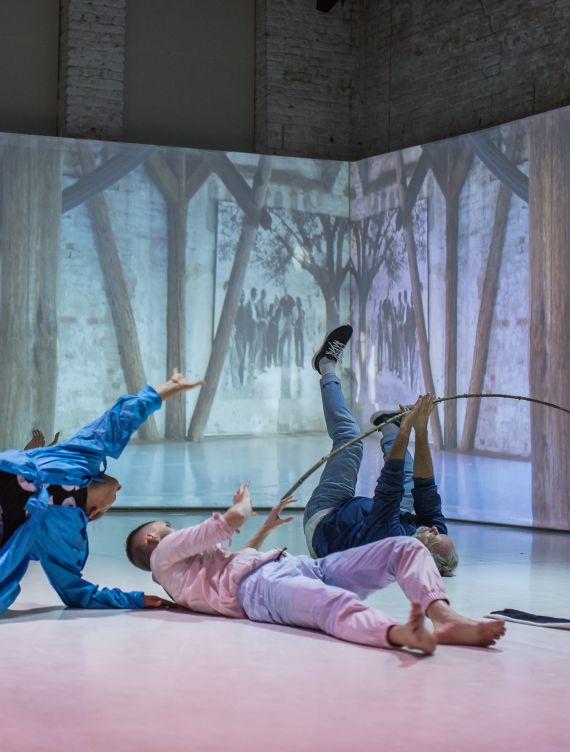
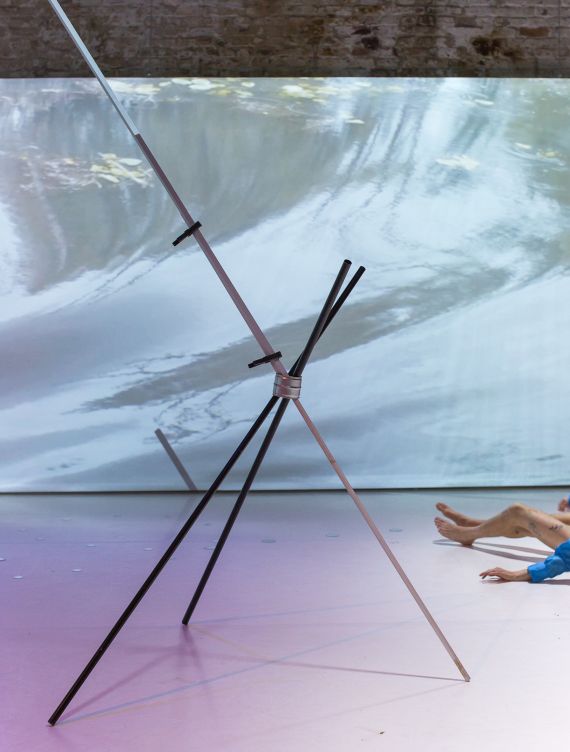
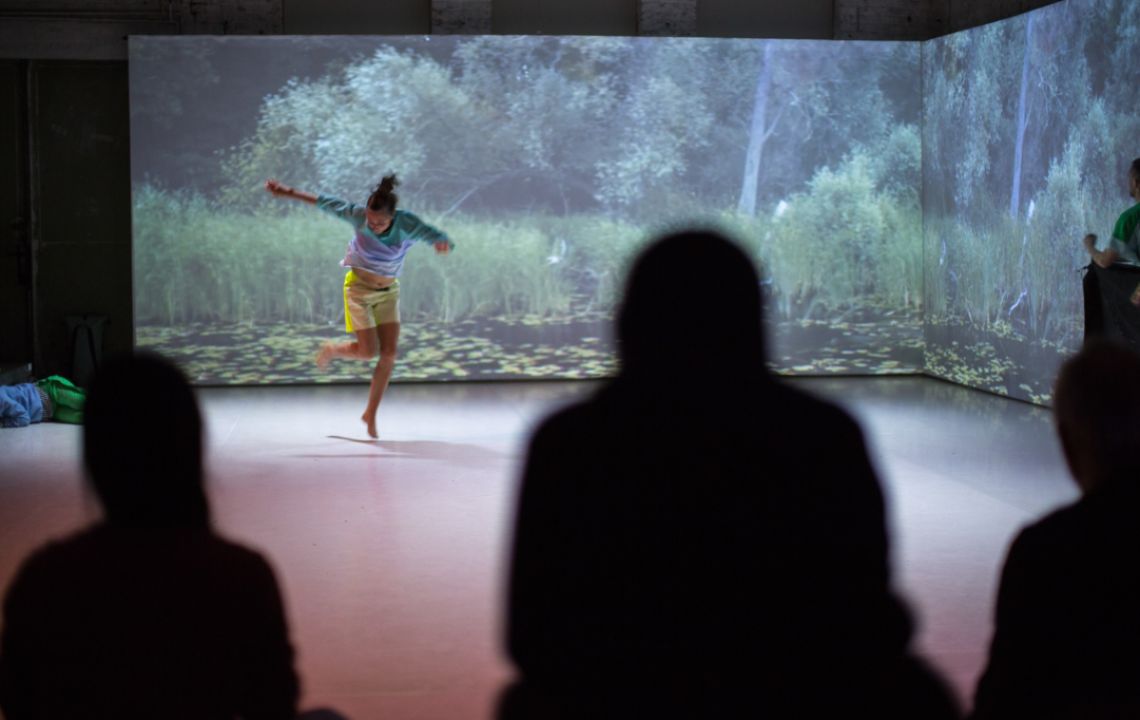
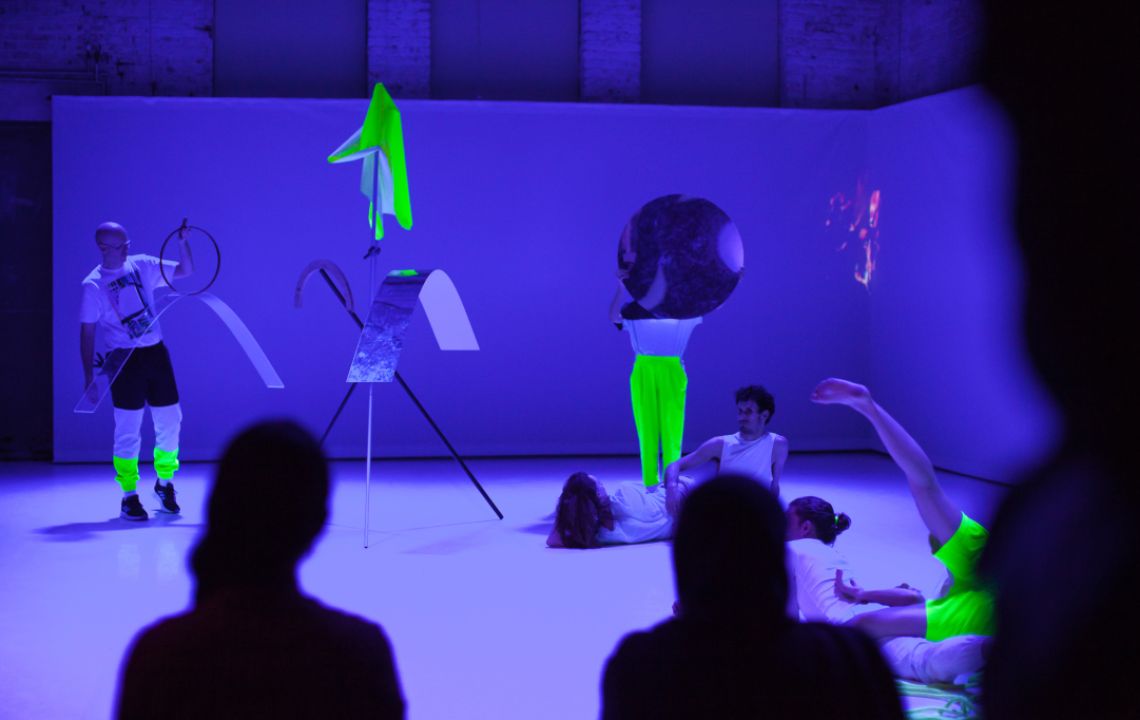
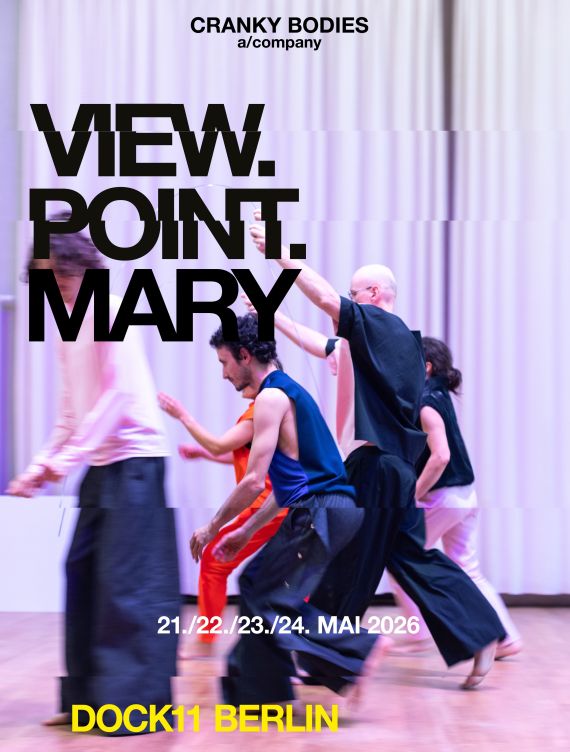
VIEW.POINT.MARY 2024
With View.Point.Mary, our dance research focused on the Six Viewpoints practice and theory developed by Mary Overlie, in combination with a continuous practice of Authentic Movement.
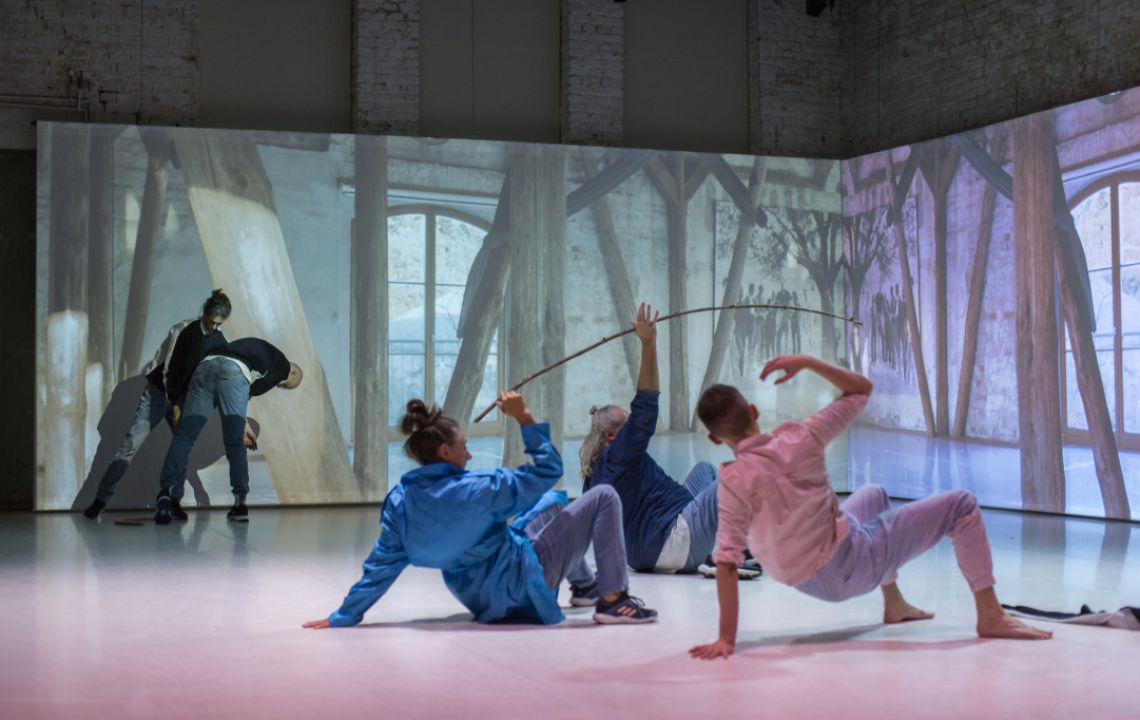
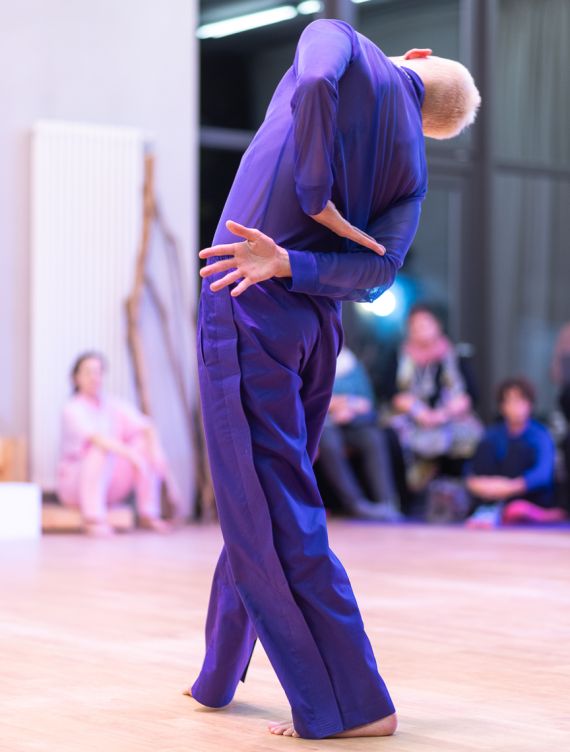
For the Transition Sculptures, Michiel worked with larger wooden blocks and structures that had been given to us from a studio clearing.
He transformed and colored them — so again the materials were recycled and reused, continuing our interest in sustainable scenographic systems.
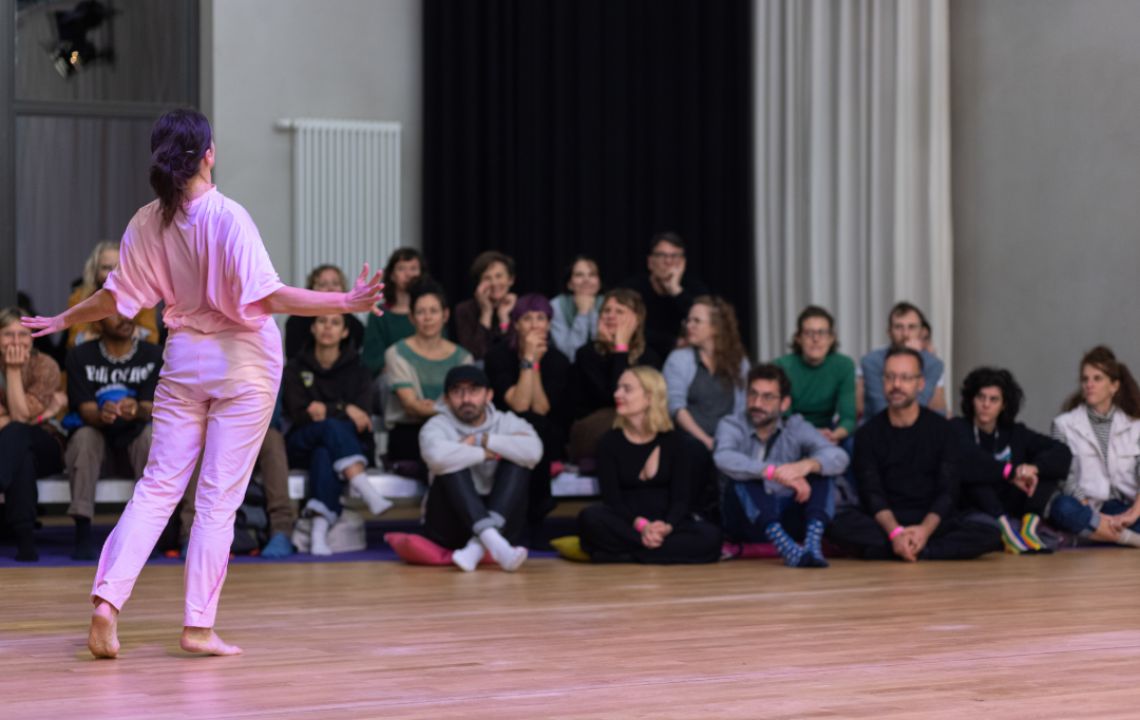
The costumes developed more and more into a kind of fashion collection, while still remaining interchangeable, with different items and add-ons that performers could combine freely during the performance.
For View.Point.Mary we returned to the 90-minute open score format that we had first explored in Cranky Bodies Dance Reset.
We realized that in our work the audience often needs time to observe — to see how ideas develop and how the composition unfolds in real time.
Our research into Mary Overlie’s postmodern thinking also opened up a broader reading interest for us in more recent developments in cultural theory and sociology, especially around the concept of metamodernity.
All of our funded projects have received restaging support from the Berlin Senate or the Hauptstadtkulturfonds.
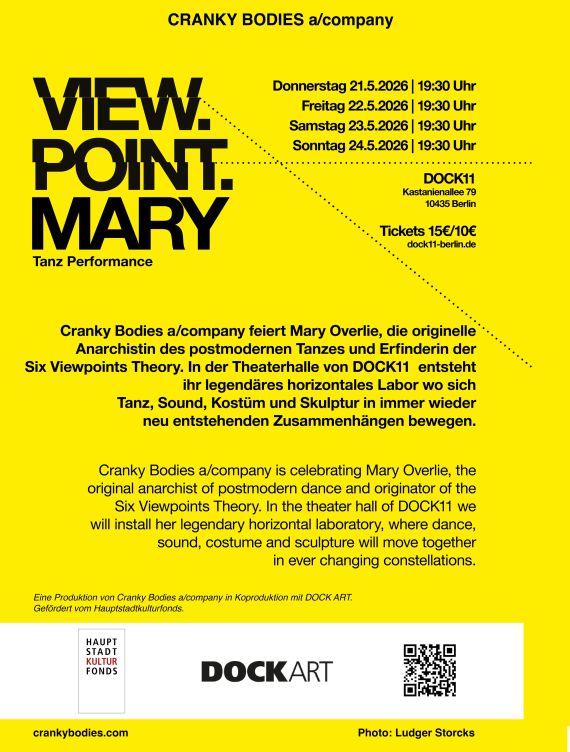
And View.Point.Mary will be restaged from May 21–24 at Dock 11 in Berlin — please come.
video excerpt
Cranky Bodies Dance Reset
This medium-length trailer includes longer sequences that give a good sense of how our improvisational choreography evolves.
FUTURE PROJECT – 2027
Across our works, each project focuses on a different improvisational research structure.
For Cranky Bodies Dance Reset it was the Contemplative Dance Practice developed by Barbara Dilley.
For Terrestrial Transit we worked with the Underscore of Nancy Stark Smith.
For View.Point.Mary we researched the Six Viewpoints of Mary Overlie.
For our next project, planned for 2027, we want to work with Ideokinesis and the Tuning Scores developed by Lisa Nelson.
But rather than presenting a single fixed production, what we are really offering is a choreographic practice.
Our works can take many forms:
They can be performed with our own ensemble, restaged with different cast sizes, or developed together with local performers through workshops and residencies.
Our scenography and costumes are lightweight, modular, and sustainable, which allows the work to adapt to many different contexts — theatres, festivals, or site-specific situations.
And because our performances are based on structured improvisation, every performance is unique.
The audience witnesses how choreography is composed in real time.
So what we are looking for are partners and venues who are interested in hosting this evolving practice —
by presenting existing works, collaborating on adapted versions, or co-producing future projects.
May 2026
coming up!